Download

1 / 6
60 likes | 186 Views
After William the Conqueror's victory at Hastings in 1066, Normans introduced feudalism to England, claiming vast lands in France. King Henry II later established common law through the Constitutions of Clarendon in 1164, setting up royal courts to replace feudal lords. This legal system incited conflict with the church. In 1215, King John faced rebellion from nobles and clergy, leading to the signing of the Magna Carta, limiting his powers over taxes and war. The governance transformed further with the Model Parliament created by Edward I in 1295, including commoners and lower clergy.

E N D
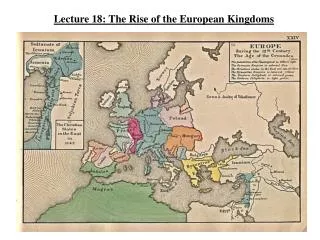
Normans introduce feudalism to England The Norman rulers of England claim large amounts of land in France. In 1066 William the Conqueror defeated the English at the Battle of Hastings. Normandy
King Henry II and Common Law • King Henry II issued the Constitutions of Clarendon in 1164. • This set up royal courts which judged people in courts, replacing the feudal lords who dealt justice before. • It made a “Common Law” that all people had to follow. • It also said the king’s court would try clergy accused of crimes – this angered the church.
The Magna Carta The nobles and the clergy (church) rebelled against King John. In 1215 they forced him to sign the Magna Carta. He agreed not to raise taxes or declare war without the consent (agreement) of the nobles, who met in the Great Council. King John I was an unlucky king. His armies lost wars and land against the French. He had to raise taxes to pay for his Crusading brother (Richard the Lionheart).
Model Parliament • In 1295, Edward I (John’s grandson) made a governing body called the Model Parliament. • This body included commoners and lower-ranking clergy