Understanding Plot: Key Elements and Types of Conflict in Storytelling
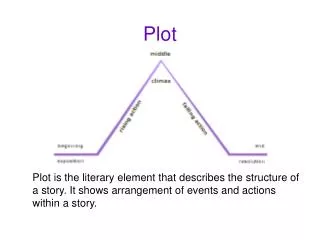
Plot is a fundamental literary element that outlines the structure of a story through the arrangement of events and actions. Key components include Exposition (the beginning), Rising Action (conflicts leading to climax), Climax (the turning point), Falling Action (events after the climax), and Resolution (the conclusion). Conflict, the dramatic struggle between opposing forces, drives the plot. Types of conflict include Character vs. Character, Character vs. Nature, Character vs. Society, and Character vs. Self, each adding depth to the narrative.

Understanding Plot: Key Elements and Types of Conflict in Storytelling
E N D
Presentation Transcript
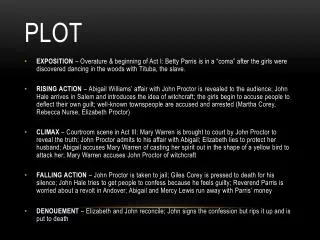
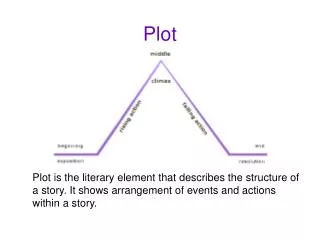
Plot Plot is the literary element that describes the structure of a story. It shows arrangement of events and actions within a story.
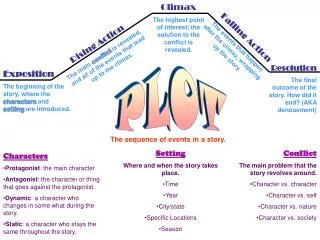
Plot Components Climax: the turning point, the most intense moment—either mentally or in action; the point where we know with almost certainty how the story will end. Falling Action: all of the action which follows the climax Rising Action: the series of conflicts and crises in the story that lead to the climax Exposition: the start of the story, the situation before the action starts Resolution: the conclusion, the tying together of all of the threads
Plot: Conflict Conflict is the dramatic struggle between two forces in a story. Without conflict, there is no plot.
Character vs Character Character vs Nature Character vs Society Character vs Self Plot: Types of Conflict
Plot: Character vs. Character Conflict This type of conflict finds the main character in conflict with another character, human or not human.
Plot: Character vs. Nature Conflict This type of conflict finds the main character in conflict with the forces of nature, which serve as the antagonist.
Plot: Character vs. Society Conflict This type of conflict has the main character in conflict with a larger group: a community, society, culture, etc.
Plot: Character vs. Self Conflict In this type of conflict, the main character experiences some kind of inner conflict.