Download

1 / 15
150 likes | 265 Views
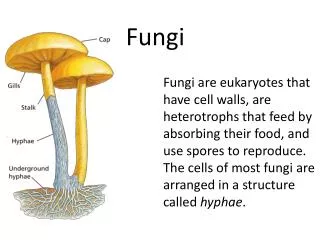
Fungi are fascinating organisms with unique characteristics. They possess cell walls and are heterotrophic, absorbing nutrients from their surroundings. With structures ranging from unicellular to multicellular, fungi are formed by hyphae that can be loosely or tightly arranged. They reproduce via spores, either asexually or sexually, allowing for genetic diversity. Fungi play crucial roles in ecosystems as decomposers, recyclers, and even in food production. They can also cause or combat diseases, showcasing their complex relationships within nature.

E N D
Characteristics of all Fungi • Cell walls • Heterotrophs (absorbing) • spores
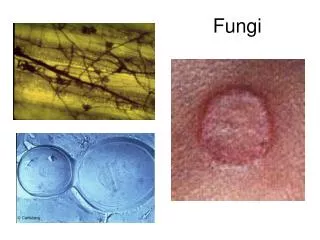
Cell Structure • Unicellular and multicellular • Arranged in hyphae • Look depends on how the hyphae is arranged • Fuzzy = loosely tangled • Solid looking = Tightly arranged
Food • Hyphae grows into food source and absorbed • Pg 90 • Chemicals ooze from hyphae and break down food • Some are parasitic
Reproduction • Spores: lightweight and protected • Spores are produced in fruiting bodies • Part you see in mushrooms
Asexual • Asexual = genetic copies • Spores • Budding (yeast)
Sexual • Hyphae grow together and mix genetic material • Usually when conditions are unfavorable • New hypae grows into a new fungi
Types of Fungi • Sac • Club • Zygote • Pg 91
Activity • Make a mini poster • Choose a type of fungi • Illustrate and bullet important information
Fungi In Nature • Decomposers and Recyclers • Food • Cause and fight disease • symbiosis
Environmental Recycling • Break down dead plants and animals • N2 recycling
Food • Yeast • Blue Cheese • Mushroom
Disease • Alexander Fleming • Penicillin • Humans • Ring worm • Athletes foot • Parasites • Dutch Elm • Corn smut • Wheat rust
Symbiosis • Plant-Root • Lichens • Pioneer organisms • Monitor pollution
Writing • Pg 95 1-3 • Key terms pg 104