
Uploaded by
karyn-bowman
1 SLIDES
193 VIEWS
20LIKES
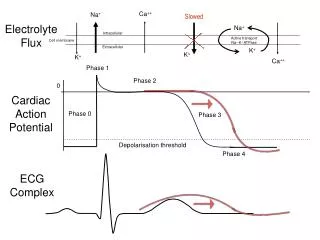
Mechanisms of Sodium and Potassium Ion Transport in Cardiac Action Potentials
DESCRIPTION
This text explores the roles of sodium (Na+) and calcium (Ca++) ions in the cardiac action potential phases, focusing on their transport mechanisms across the cell membrane. It details the active transport by Na+-K+ ATPase and the impact of various electrolyte fluxes during different phases of depolarization and repolarization. The implications for electrocardiogram (ECG) readings and cardiac function are also discussed to enhance the understanding of cardiac physiology in health and disease.
Download
1 / 1
Download Presentation 
Mechanisms of Sodium and Potassium Ion Transport in Cardiac Action Potentials
An Image/Link below is provided (as is) to download presentation
Download Policy: Content on the Website is provided to you AS IS for your information and personal use and may not be sold / licensed / shared on other websites without getting consent from its author.
Content is provided to you AS IS for your information and personal use only.
Download presentation by click this link.
While downloading, if for some reason you are not able to download a presentation, the publisher may have deleted the file from their server.
During download, if you can't get a presentation, the file might be deleted by the publisher.
E N D
Presentation Transcript
Ca++ Na+ Slowed Electrolyte Flux Na+ Intracellular Active transport Na+-K+ ATPase Cell membrane Extracellular K+ K+ K+ Ca++ Phase 2 Phase 1 0 Cardiac Action Potential Phase 0 Phase 3 Depolarisation threshold Phase 4 ECG Complex
More Related