Download
1 / 18
180 likes | 299 Views
Explore the profound journey of Native Americans from their migration across the Bering Strait to the establishment of complex societies in Mesoamerica and North America. Discover the significance of agriculture, the emergence of indigenous civilizations like the Olmecs, Mayans, Aztecs, and Incas, and the cultural heights achieved by groups such as the Anasazi and Mississippians. Understand the diversity of traditions, languages, and lifestyles, alongside the impacts of European contact and the various cultural exchanges that shaped their histories.

E N D
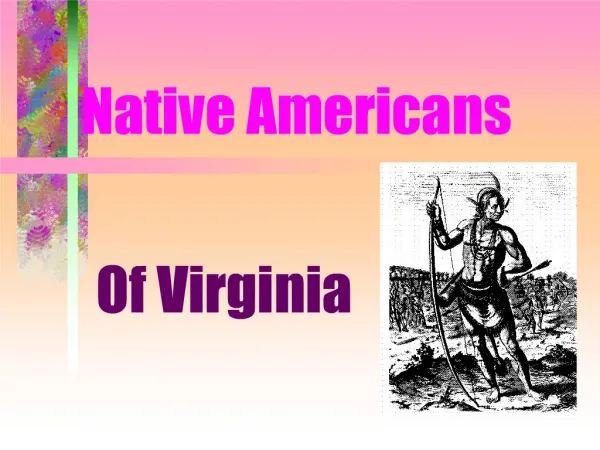
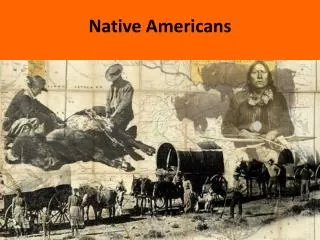
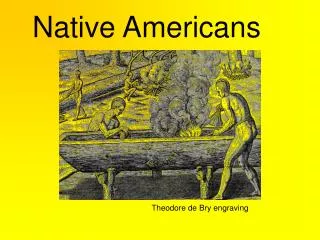
Native Americans Theodore de Bry engraving
New World Beginnings • Migration from Asia • 15,000-10,000 B.C.-8,000 B.C. • Bering Strait: land bridge is impassable, which results in Native Americans isolation
Mammoths and Other Animals of the New World: • Waco Mammoth Site: • http://www.wacomammoth.com/ • Fish • Birds • Reptiles • Other winged creatures
Farming and Crop Cultivation • 7,000 B.C.—advent of farming in Mesoamerica • Olmecs, Mayans, Aztecs (Mesoamerica) • Incas (South America)
Complex societies in North America: • The Anasazi (cultural height: 900-1200 a.d.) Cliff Palace, Mesa Verde National Park
Mississippian Tradition • Settled along rivers such as the Mississippi, Ohio, etc. • 700 A.D.—European settlement • Main food crops: eastern flint maize and pole beans • Importance of the sun, corn, and temple mounds in religion • Women’s roles
Located in what is now Southern Illinois, just outside of downtown St.Louis, MO • The Mississippi, Missouri, and Illinois Rivers intersect forming a fertile landscape • Existed at the center of the Mississippian civilization • Largest city built before Europeans arrived in America (20,000-30,000 people in the 1100s) • At least 109 mounds
Monks Mound • 100-feet high • Named in 1700’s by French Monks • Most likely the mound where the principal ruler built his house or where a temple existed • Contains 14 million baskets of soil and its base stretches 14 acres long
Birdman Tablet • Birdman Tablet symbolized the union between heaven and earth • Birdman symbolism figured prominently in Cahokian religion. • Found during excavation of Monks Mound • Has become logo of Cahokia Mounds • Actual use of tablet is still a mystery • The birdman was represented by the king, who could have been believed to be the incarnation or earthly representative of the Birdman
Diversity of Native American Culture Farming, fishing, hunter-gatherers, nomadic, semi-nomadic, sedentary Up to 1,000 different languages among Native Americans in North America by 1492
Native Americans v. Europeans: A Clash of Ideas • 1. Attitudes toward the natural world • 2. Attitudes toward land ownership • 3. Attitudes about women • 4. Attitudes about religion