Download
1 / 6
60 likes | 179 Views
This exploration delves into the fundamental differences between European compartmentalized views of life and the holistic understanding of existence found in tribal societies, particularly Native American and African cultures. While Europeans often categorized life into distinct areas such as work, politics, and religion, indigenous peoples blended sacred and secular affairs seamlessly. The encounter between these conflicting worldviews raised pivotal questions about humanity, spirituality, and the legitimacy of tribal religions during the era of colonial conquest.

E N D
Original Diversity Clashing Cultures and Colonial Conquest
Compartmentalized v. Holistic Religion • In the West, at least since the Enlightenment, most have viewed life as separated into compartments, including religion: • Work • Politics • Education • Recreation • RELIGION • In contrast, tribal societies like those first encountered by Europeans in the 15th century held a holistic understanding of life, with no division between sacred and secular.
Holistic Religion: Native Americans • Founding myths • Seasonal festivals • Hunting celebrations • Rituals for sickness, childbirth, etc.
Holistic Religion: Africans • Creation stories • Spirit possession • Ritual singing/dancing • Ceremonial rites of passage • The point: sacred forces interact with human daily life on every level, either for good or ill, and the goal was to entice the favor of those forces for ones cause.
Religious Diversity in Europe • The emergence of Protestantism brought new diversity to European Christianity just as explorers were discovering the “New World.” • Lutherans in Germany • Calvinists in Switzerland • Anabaptists • Anglicans and Puritans in England • Catholics in Spain, Portugal, France, and parts of Germany • Alongside Christians, Europe was home to sizable Jewish and Islamic communities.
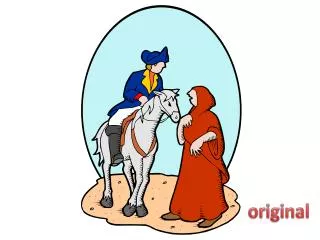
Contact: Europeans Encounter Tribal Religion • Do they have religion? • No institutions • No sacred texts • No monotheism • Rituals like dancing appeared recreational rather than religious • Do they have souls? • Physical and social differences cast doubt on native humanity • Should they be converted or killed?