Exploring Party Ideologies: Connections and Divergences in Political Beliefs
170 likes | 288 Views
This paper delves into the ideological foundations of political parties, examining their evolution and what they represent in contemporary society. It will cover key ideological families such as socialism, communism, Christian democracy, liberalism, and conservatism. Through a review of historical contexts and ideological shifts, the research aims to analyze whether parties maintain their core beliefs over time or adapt to changing political landscapes. A preliminary bibliography will outline significant sources, including foundational texts and contemporary analyses that inform this exploration.


Exploring Party Ideologies: Connections and Divergences in Political Beliefs
E N D
Presentation Transcript
The Ideological Connection: Party ideologies & what they stand (or stood) for
Reminders: • Paper topics due Tuesday, February 3rd • These should contain: • A brief statement of the topic as you propose to define it • A preliminary bibliography of sources you are likely to use • Including a brief annotation of what you expect to find in them or how you expect to use them
Recap: Ways of distinguishing parties: • Size or strength • Role • By their ideology or ideological family • By the ways in which they are organized
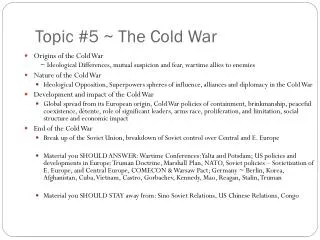
The European Experience: Ideological families: • Socialism (including Communism, Socialism and Social Democracy) • Christian Democracy • Liberalism • Conservatism
The Party Spectrum Today • (ex-)Communists • Greens, left-libertarians • Social Democracy • Christian Democracy • Liberalism (Radicalism) • Conservatism • The new right
How strong is the ideological connection? • Should we think of parties as members of ideological families? • If so, are parties • carriers of political ideologies? OR • bearers of ideological labels?
What is a political ideology? • A political ideology is a a set of beliefs • more or less constrained or inter-related • about society, economy & what has been or can be achieved through politics • Typical components: • Rights and duties • View of the economy • A vision of the future
Specificity & constraint • However, ideologies vary: • Some are more clearly stated than others: • e.g. Socialism, Communism, classical liberalism • Others are less clearly defined: • Conservatism • Some variants of Christian Democracy • Populism • The contemporary new right
Conservatism • What is Conservatism? • Conservatism according to Sir Edmund Burke • Conservatism in practice: • One nation conservatism in the UK • Thatcherism • Social v. fiscal conservatism
Christian Democracy • Origins: • Response to godless Communism? • Response to “the social question” • Characteristics: • Wholistic or organic world-view: see society as a fabric, with upper and lower strata • Centre-right v. centre-left variants • Italy, Germany, Netherlands, Austria
Liberalism • What is it about? • Classical v. ‘reform’ liberalism • The government which governs least governs best v. • state intervention to ensure equal rights, equal opportunity • American usage • Thatcherism
Ideological change • Do parties today stand for the same things that they stood for 50-150 years ago? • Suppositions: • There has been a decline or disappearance of political ideology (end of ideology thesis) vs. • Ideological change: parties retain earlier commitments, but their understanding of what can be done and how it should be done has changed • Or no change at all?
Socialism, social democracy & Communism • Origins: Marx and non-Marxist • Early socialism: orthodoxy • 19 & 20th century splits • Revisionism and social democracy • Democratic socialism & socialism • Communism
What divides them? Strategy and tactics: • What do you do while you wait for an inevitable revolution? • Can you involuntarily push history along? • Can you achieve socialism via the ballot box and parliamentary democracy? • How much public ownership of the means of production?
Social Democracy today: What is left of the left? • Building socialism or managing capitalism? • Backing off from public ownership • The Keynsian welfare state: • Managing the welfare state • Full employment • Generous safety net – insurance against risks of life in industrial and/or capitalist economies • The cold war and its impact
Third way politics • Tony Blair’s New Labour Party • Old v New Labour • More links with capital – e.g. public-private partnerships • Tougher stance on the administration of justice • The SPD in Germany • The PvdA (Dutch Social Democrats) Social Democracy today?
Other party families • Do green or left liberatian parties share a common ideology set of beliefs? • Do new right (sometimes called new right populist) parties share a common ideology or set of beliefs?