Classification
Explore the fascinating world of biological classification, where scientists categorize organisms into six kingdoms based on shared characteristics. Learn about the basic cellular structures of prokaryotic and eukaryotic cells, and discover how autotrophs and heterotrophs obtain energy. This educational overview will provide insights into the diversity of life, including examples from each kingdom: Eubacteria, Archaebacteria, Protista, Fungi, Plantae, and Animalia. Join us in understanding how these groups are classified and their importance in our ecosystems.

Classification
E N D
Presentation Transcript
Classification Scientists categorizing organisms into orderly groups based on similar characteristics
Opener 9-11-13 List the 6 kingdoms of life.
7 Levels of Classification King Phillip Came Over For Grape Soda
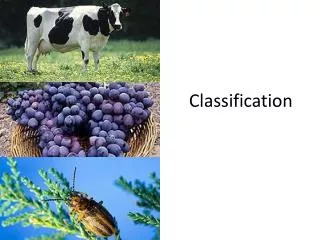
Opener 9-10-13 Create a list of 5 living organisms. Make your list as diverse as possible (wide variety).
S7L1. S7L1: Students will investigate the diversity of living organisms and how they can be compared scientifically.
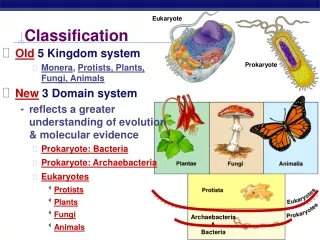
Type of Cell Prokaryotic Cells do not have a nucleus.
Type of Cell Eukaryotic Cells do have a nucleus.
Nutrition Autotrophs make their own food (Producers).
Heterotrophs must eat other organisms to get the energy they need (synonym to consumer).
Type of Cell Eubacteria: Prokaryotic Archaebacteria: Prokaryotic Protista: Eukaryotic Fungi: Eukaryotic Plantae: Eukaryotic Animalia: Eukaryotic
Cell Wall Eubacteria: Cells walls of peptidoglycan Archaebacteria: Cell walls of peptidoglycan Protista: Cell walls of cellulose Fungi: Cell walls of chitin Plantae: Cell walls of cellulose Animalia: No cell wall
Number of Cells Eubacteria: unicellular Archaebacteria: unicellular Protista: most unicellular, some multicellular Fungi: some unicellular, some multicellular Plantae: multicellular Animalia: multicellular
Nutrition Eubacteria: Decomposers and Producers Archaebacteria: Decomposers and Producers Protista: Producer, Consumers, Decomposers Fungi: Decomposers Plantae: Producers/Autotrophs Animalia: Consumers/Heterotrophs