Cattle Behavior
Cattle Behavior. Cattle handling behavior. understanding cattle behavior can reduce livestock stress during handling stress may reduce conception rate stress may cause immune suppression rough handling may cause bruising

Cattle Behavior
E N D
Presentation Transcript
Cattle handling behavior • understanding cattle behavior can reduce livestock stress during handling • stress may reduce conception rate • stress may cause immune suppression • rough handling may cause bruising • anticipation of normal behavioral responses during handling improves handler and animal safety
Vision in cattle • cattle have excellent wide angle vision • poor depth perception may result in balking at shadows • Brahmans may hold head higher due to heavy skin fold over brow
Hearing in cattle • cattle are more sensitive to high frequency noises than humans • loud noises may distress cattle
Moving Cattle • cattle tend to move towards light if not glaring or blinding • may balk at puddles, drain grates • may balk at changes in floor texture or level • shadows discourage movement
Moving cattle • cattle may balk at clanking metal in chutes • moving or flapping objects may spook cattle • objects in runway, race, chute may causing balking
Moving cattle • people standing in front of the squeeze chute discourages cattle movement • objects such as chains hanging within the working area may cause cattle to balk
Encouraging cattle movement • plastic strips attached to a stick - cattle tend to move away from noise and movement • cattle will move more easily toward home pasture or pen
Encouraging cattle movement • dogs - only utilize in open areas or pastures • electric prod - LAST RESORT!!
Flight zone • “flight zone” = cow personal space
Flight zone • when flight zone entered, cattle move away • when zone is exited, cattle stop moving and may turn to face handler or predator
Flight zone • in handling areas it is important not to invade flight zone too deeply as cattle may attempt to move backwards • occasionally cattle will rear up in a single file chute if handler approaches too closely • in either case, backing out of flight zone should terminate escape behavior
“Companion” cattle • may be difficult to work • have little or no flight zone • may be dangerous during feeding or if seeking attention
Herding behavior • cattle follow the leader • like to maintain visual contact with each other • do not like to be isolated from herd mates - can be a dangerous situation for the handler
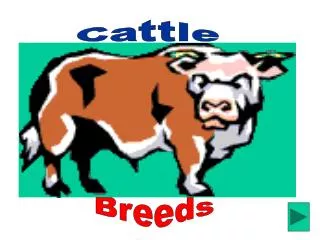
Breed variations • Brahmans & their crosses tend to be more excitable • variations in personalities in Bos taurus breeds, also • Angus - excitable • Herefords - quiet • Chianina - nervous/jump fences
Handling facility design • solid fences in working areas reduce distractions • cattle should only see one way to escape • should be able to see cattle in front of them • utilize “point of balance”
Handling facility design • loading ramps should have solid sides • maximum incline of ramp = 20o
Individual animal behavior • be cautious of bulls in pasture - best to respect rather than fear them • newly arrived cattle that are agitated are allowed to acclimate overnight in clinic when possible
Individual animal handling • cattle catch on to routine readily, may need to alter tactics used to move them from pen to treatment area • brushing tends to calm cattle (bulls esp.) • food rewards offered after treatment - “conditioned response” • avoid blind spot directly behind animal, may be kicked
Defense mechanisms • head butting • kicking • Brahman influence cows have been known to bite if protecting calves
Defense mechanisms • cattle with horns tend to be more aggressive • it is best if all cattle in a group are either horned or dehorned
Show cattle • show cattle tend to be fairly well behaved • seem to respect children more than adults
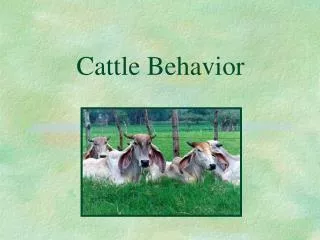
Brahman behavior • Brahman cows may be very protective of calves • may attempt to bite • seem to possess good memory, very intelligent
Brahman behavior • bulls often are quite tame • enjoy being scratched and will seek attention
Cattle and dogs • well-trained dogs can be very useful when working cattle • cattle may charge if dog enters flight zone, especially a cow with a calf • dogs may be useful if attempting to get a “down” cow up