Small Core Drill vs Regular Drill: Key Differences
A specialized small core drill outperforms standard drills when precision matters most. Unlike conventional twist bits, a small core drill removes a cylindrical core of material, reducing friction and heat buildup. This design prevents cracking in brittle materials like glass and ceramic. Core drills require less pressure and generate cleaner holes with smoother edges. The hollow center design of a small core drill allows deeper penetration with less power consumption, making them ideal for delicate materials. https://ukam.com/diamond-micro-drill/

Small Core Drill vs Regular Drill: Key Differences
E N D
Presentation Transcript
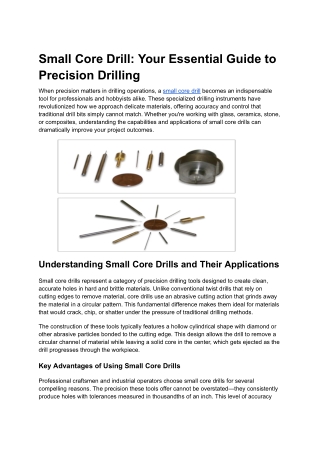
Small Core Drill: Your Essential Guide to Precision Drilling When precision matters in drilling operations, a small core drill becomes an indispensable tool for professionals and hobbyists alike. These specialized drilling instruments have revolutionized how we approach delicate materials, offering accuracy and control that traditional drill bits simply cannot match. Whether you're working with glass, ceramics, stone, or composites, understanding the capabilities and applications of small core drills can dramatically improve your project outcomes. Understanding Small Core Drills and Their Applications Small core drills represent a category of precision drilling tools designed to create clean, accurate holes in hard and brittle materials. Unlike conventional twist drills that rely on cutting edges to remove material, core drills use an abrasive cutting action that grinds away the material in a circular pattern. This fundamental difference makes them ideal for materials that would crack, chip, or shatter under the pressure of traditional drilling methods. The construction of these tools typically features a hollow cylindrical shape with diamond or other abrasive particles bonded to the cutting edge. This design allows the drill to remove a circular channel of material while leaving a solid core in the center, which gets ejected as the drill progresses through the workpiece. Key Advantages of Using Small Core Drills Professional craftsmen and industrial operators choose small core drills for several compelling reasons. The precision these tools offer cannot be overstated—they consistently produce holes with tolerances measured in thousandths of an inch. This level of accuracy
proves essential in industries where even minor deviations can compromise the integrity of the final product. The versatility of small core drills extends across numerous materials. Glass manufacturers use them for creating mounting holes in delicate panels. Stone fabricators rely on them for decorative inlays and functional openings. Electronics manufacturers employ them when working with circuit boards and ceramic substrates. The medical device industry depends on their precision for creating intricate components. Another significant advantage lies in the clean finish these drills produce. Traditional drilling methods often leave rough edges, burrs, or stress fractures around the hole perimeter. Small core drills minimize these issues, frequently eliminating the need for secondary finishing operations. This translates to time savings and reduced labor costs in production environments. Choosing the Right Small Core Drill for Your Project Selecting an appropriate small core drill requires consideration of several factors. The material you plan to drill stands as the primary consideration. Different materials demand specific abrasive types and bond matrices. Diamond core drills excel with hard materials like glass, porcelain, granite, and engineered stone. For softer materials or metals, alternative abrasive compositions may prove more effective. Drill diameter represents another critical specification. Small core drills typically range from one millimeter to several inches in diameter. Your project requirements will dictate the appropriate size, but remember that smaller diameters require more careful handling and often slower drilling speeds to prevent breakage. The bond type—how the abrasive particles attach to the drill body—affects performance and longevity. Sintered bonds offer durability for production environments, while electroplated bonds provide aggressive cutting action for specialized applications. Resin bonds deliver smooth cutting action with minimal heat generation, making them suitable for temperature-sensitive materials. Comparing Small Core Drills with Micro Drills While both tools serve precision drilling purposes, understanding the distinction between small core drills and micro drills helps you select the optimal tool for specific tasks. Micro drills generally refer to solid drill bits with extremely small diameters, often used for creating pilot holes or drilling in soft materials. They function more like miniature twist drills with cutting edges that remove material through a shearing action. Small core drills, conversely, use the abrasive grinding process described earlier and prove superior for hard, brittle materials. The choice between these tools depends on your material type, required hole size, and desired precision level. Proper Techniques for Operating Small Core Drills
Success with small core drills depends heavily on proper operating techniques. Speed control stands paramount—excessive speed generates heat that can damage both the drill and workpiece. Most applications benefit from moderate to slow rotational speeds, typically between 500 and 3000 RPM depending on drill diameter and material hardness. Coolant application plays a crucial role in maintaining drill performance and extending tool life. Water serves as the most common coolant for small core drilling operations, though specialized cutting fluids may benefit certain applications. The coolant performs multiple functions: it reduces friction and heat, flushes away debris from the cutting zone, and helps prevent the abrasive particles from loading with removed material. Pressure management requires a delicate balance. Insufficient pressure slows the drilling process and can cause premature drill wear through glazing of the abrasive surface. Excessive pressure risks breaking the drill, particularly with smaller diameters, and can cause chipping or cracking in brittle materials. Most operators develop a feel for appropriate pressure through experience, but starting with light pressure and gradually increasing until the drill cuts efficiently provides a safe approach for beginners. Essential Safety Considerations Working with small core drills demands attention to safety protocols. Eye protection is non-negotiable—debris and coolant spray can cause serious injury. When drilling brittle materials, the risk of small fragments ejecting from the work area increases significantly. Secure workpiece mounting prevents movement during drilling, which could cause the drill to bind or break. For small or irregularly shaped pieces, consider using jigs or fixtures designed for drilling operations. This not only improves safety but also enhances accuracy and consistency across multiple pieces. Electrical safety deserves attention when using water-based coolants with power tools. Ensure your equipment features appropriate grounding and consider using ground fault circuit interrupters in wet drilling environments. Maintaining Your Small Core Drills Proper maintenance extends the life of small core drills and maintains their performance characteristics. After each use, thoroughly clean the drill to remove material residue and coolant buildup. Allowing debris to dry on the drill surface can interfere with subsequent cutting performance. Storage conditions affect drill longevity. Keep drills in a dry environment to prevent corrosion of metal components. Organize them systematically to prevent damage from contact with other tools or each other. Many professionals use dedicated drill indexes or cases that provide individual compartments for each size. Periodic inspection helps identify wear patterns or damage before they affect project quality. Look for uneven wear on the cutting edge, which might indicate improper technique or
equipment issues. Check for cracks or chips in the drill body that could lead to catastrophic failure during use. When drills show signs of wear but haven't failed completely, some types can be redressed or sharpened to restore cutting performance. This typically applies to drills with exposed diamond particles in sintered or electroplated bonds. Consult manufacturer guidelines or professional tool service providers for appropriate reconditioning methods. Frequently Asked Questions What materials can small core drills cut through effectively? Small core drills excel at cutting glass, ceramics, porcelain, natural stone, engineered stone, composite materials, and certain metals depending on the abrasive type. How long does a typical small core drill last? Lifespan varies based on material drilled, operating conditions, and maintenance, but quality drills can produce hundreds to thousands of holes with proper use. Can I use small core drills with a handheld drill? Yes, though drill press mounting provides better results by maintaining perpendicular alignment and consistent pressure throughout the drilling process. What speed should I use for drilling glass? Glass typically requires 1000-2000 RPM with constant water cooling, though exact speeds depend on drill diameter and glass thickness. Do small core drills require special equipment? While basic drills work with standard power tools, optimal results come from variable speed equipment with coolant delivery systems. How do I prevent the material from cracking during drilling? Use appropriate speed, maintain constant coolant flow, apply steady moderate pressure, and ensure the workpiece is properly supported beneath the drilling point. Conclusion Mastering small core drill techniques opens possibilities for precision work across numerous applications and industries. These specialized tools deliver accuracy, clean finishes, and reliability that justify their place in any serious workshop or production environment. By selecting appropriate drills for your materials, employing proper techniques, and maintaining your tools carefully, you can achieve professional results consistently. Whether you're beginning your journey with precision drilling or seeking to refine your existing skills,
understanding the principles outlined in this guide will enhance your capability and confidence when working with these remarkable tools.