Mongols
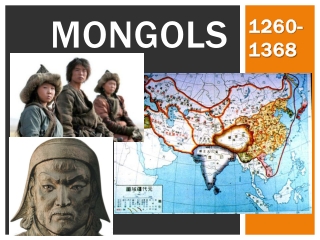
The Mongols, fierce nomadic people from Central and Northern Asia, thrived in harsh environments as expert horse riders, relying on herding, trade, and conquest to survive. Under the leadership of Genghis Khan, also known as the "Universal Ruler," they conquered vast territories, including China, utilizing mobility, brutality, and psychological warfare. After Genghis Khan's death, Kublai Khan further expanded the empire, integrating Mongolian and Chinese cultures while maintaining separation. The Mongol Empire, marked by strict organization and discipline, ultimately transformed trade and facilitated cross-cultural exchanges.

Mongols
E N D
Presentation Transcript
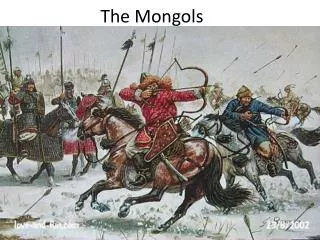
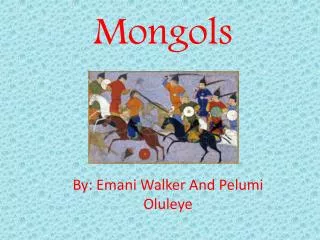
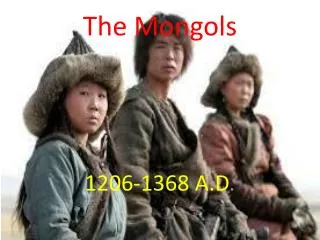
Nomadic peoples from central/northern Asia & had little resources, relying on herding animals, trade, & simply taking it to survive. • They were used to living in harsh environments, making them tough & expert horseback riders. • One man unites these people taking the name Genghis Khan “universal Ruler” • They conquered China and more by: being mobile, striking quick, brutality, psychological warfare, being organized, strict discipline, loyalty, rewards, siege warfare, and gunpowder. • Genghis Khan dies & his son Kublai Khan takes over to expand the empire further.
The Empire is divided into 4 regions each with a ruler that reports back to the Khan. • They only stopped expanding when Kublai Khan dies. • Kublai Khan controlled China & defeated the Song Dynasty. • Chinese though Mongols were uncivilized & Mongols wanted to stay separate from the Chinese. • To get Chinese on his side he moved his capital into China, used Chinese names, tolerated local beliefs, ways of life, & conquered peoples could stay as long as they pay. • Mongols lived separately, forbade intermarriage, different laws, taxes, & Chinese cant join the army or government (no civil service exam). • Adopted Islam, promoted trade, & welcomed Foreigners.