Download
1 / 11
110 likes | 230 Views
This brief overview introduces the fascinating world of arthropods, a diverse group within the Invertebrate phylum. Key terms such as cephalization, molting, and appendages are defined, providing insight into their complex biological structures and functions. Characteristics including segmented bodies, chitinous exoskeletons, and bilateral symmetry are highlighted, alongside examples from the four major subphyla: Chelicerata (spiders, scorpions), Crustacea (crabs, lobsters), Uniramia (centipedes, insects), and Trilobita (extinct). Gain a foundational understanding of these remarkable organisms.

E N D
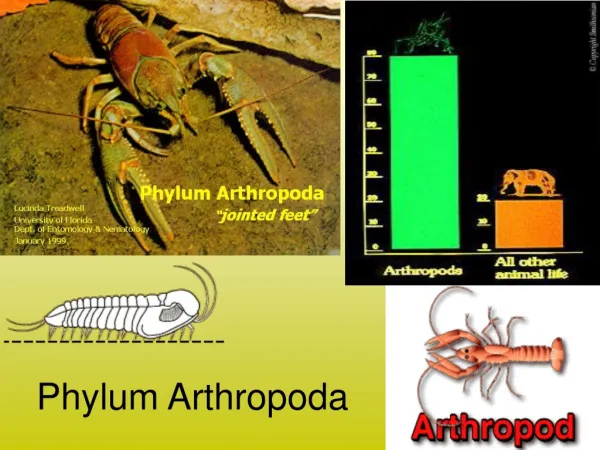
Invertebrate Phylum Arthropoda
Vocabulary Cephalization = concentration of nerve tissue at anterior end of organism Molting = periodic shedding of exoskeleton to allow for growth Chelicerae = pincher-like mouth parts
Vocabulary Mandibles = chewing mouth parts adapted for piercing and sucking Appendages = extensions of body parts; legs and antennae Cephalothorax = fused head and thorax
Vocabulary Pedipalps = sense appendage for holding and transporting food; carry sperm Chitin = complex carbohydrate; fungi cell wall, arthropod exoskeleton
Characteristics * Segmented bodies with paired, jointed appendages * Chitinous exoskeleton * Bilateral symmetrical coelomates * Must molt to grow * Open circulatory system * High degree of cephalization * Ventral nerve cord
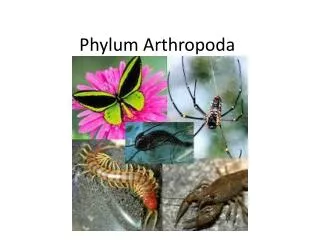
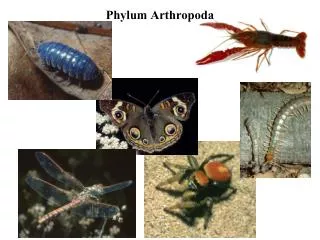
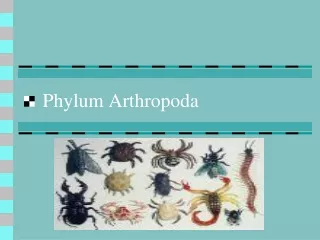
Four Subphylum: Chelicerata - horseshoe crabs, sea spiders, spiders, scorpions, ticks, mites * spiders - chelicerae modified asfangs that inject venom; spin silk
Crustacea - crabs, lobsters, shrimp, crayfish, barnacles, water, fleas * branched antennae; pair of mandibles; respire with gills
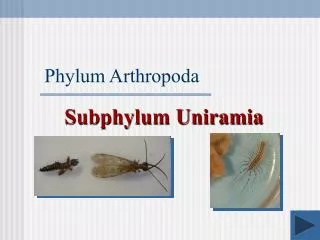
Uniramia – centipedes (bite), millipedes (herbivores), all insects * antennae, mandibies, unbranched appendages (Trilobita) - extinct organisms called trilobites
Antenna Rostrum Anternnule Cheliped Compound eye Carapace Head Cephalothorax Walk Legs Thorax Abdomen Uropod Telson
Mouth Mandible Maxilla Maxilliped