Download
1 / 11
110 likes | 227 Views
Abolitionists in the North and South. Katie Moore & Anne Collins. Nov 18, 2008. The South Lashes Back. Antislavery in the South. In the 1820s, Antislavery groups were numerous in the South. Silencing abolitionists.

E N D
Abolitionists in the North and South Katie Moore & Anne Collins Nov 18, 2008
Antislavery in the South • In the 1820s, Antislavery groups were numerous in the South
Silencing abolitionists • Virginia in 1831-1832 passed laws that defeated emancipation proposals • States tightened their slave codes and prohibited emancipation
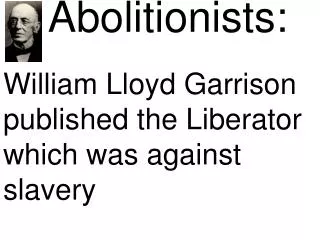
Fear in the South • Nat Turner’s rebellion in 1831 frightened many white Southerners • William Lloyd Garrison wrote the Liberator and was called a terrorist • The nullification crisis of 1832 created more panic, causing irrational actions
Whites proslavery campaign • Southerners claim slavery was supported by the bible and the constitution • They claimed that slaves were happier than unemployed free blacks in the North
South’s fight in Congress • In 1836, Congress passed the Gag Resolution, in favor of the South • Gag Resolution had all antislavery appeals tabled without debate • Under Southern pressure, Congress banned all abolitionist material from the post (mail)
North Versus Abolitionists • The Radical (Garrisonian) Abolitionists were unpopular in the North due to their ideas of Northern succession from the Union due to their support of the Constitution and strong national government. • Radical Abolitionist caused mob outbursts • Men like Reverend Lovejoy were mobbed and killed
North’s tie to the South • In the 1850s, the North was economically tied to the South through debt of 300 million • Textile mills needed southern cotton to make profit
Northern acceptance of Antislavery • By 1850, many northerners agreed with antislavery • Few northerners wanted to abolish slavery outright, but many were against the expansion of slavery to the West