Enhancing UNICEF's Preparedness Systems for Effective Emergency Response
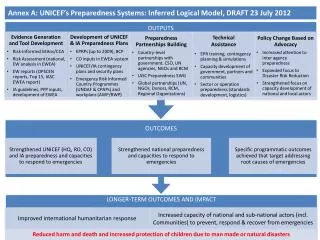
This document outlines the logical model for UNICEF's preparedness systems, focusing on evidence generation and tool development for effective risk-informed situational analyses (SitAns) and country-level preparedness plans. It highlights output areas such as risk assessment, early warning (EW) reports, and the development of contingency plans. Key components include building partnerships, technical assistance for training and simulations, and promoting policy changes. The aim is to strengthen both UNICEF's and national capacities to respond to emergencies, improve humanitarian responses, and protect vulnerable populations, especially children.

Enhancing UNICEF's Preparedness Systems for Effective Emergency Response
E N D
Presentation Transcript
Annex A: UNICEF’s Preparedness Systems: Inferred Logical Model, DRAFT 23 July 2012 • OUTPUTS • Evidence Generation and Tool Development • Risk-informed SitAns/CCA • Risk Assessment (national, EW analysis in EWEA) • EW reports (OPSCEN reports, Top 15, IASC EWEA report) • IA guidelines, PPP inputs, development of EWEA • Development of UNICEF & IA Preparedness Plans • EPRPs (up to 2009), BCP • CO inputs in EWEA system • UNICEF/IA contingency plans and security plans • Emergency Risk Informed Country Programmes (UNDAF & CPAPs) and workplans (AWP/RWP) • Preparedness Partnerships Building • Country-level partnerships with government, CSO, UN agencies, NGOs and RCM • IASC Preparedness SWG • Global partnerships (UN, NGOs, Donors, RCM, Regional Organizations) • Technical • Assistance • EPR training, contingency planning & simulations • Capacity development of government, partners and communities • Sector or operation preparedness (standards development, logistics) • Policy Change Based on Advocacy • Increased attention to inter agency preparedness • Expanded focus to Disaster Risk Reduction • Strengthened focus on capacity development of national and local actors • OUTCOMES • Strengthened UNICEF (HQ, RO, CO) and IA preparedness and capacities to respond to emergencies • Strengthened national preparedness and capacities to respond to emergencies • Specific programmatic outcomes achieved that target addressing root causes of emergencies • LONGER-TERM OUTCOMES AND IMPACT • Improved international humanitarian response • Increased capacity of nationaland sub-national actors (incl. Communities) to prevent, respond & recover from emergencies • Reduced harm and death and increased protection of children due to man made or natural disasters