
SlideServe
Menu
Preferences
© SlideServe · v2026

Information Processing Theories

tori avatar
6 slides · 544 Views · 60 likes · Nov 03, 2012

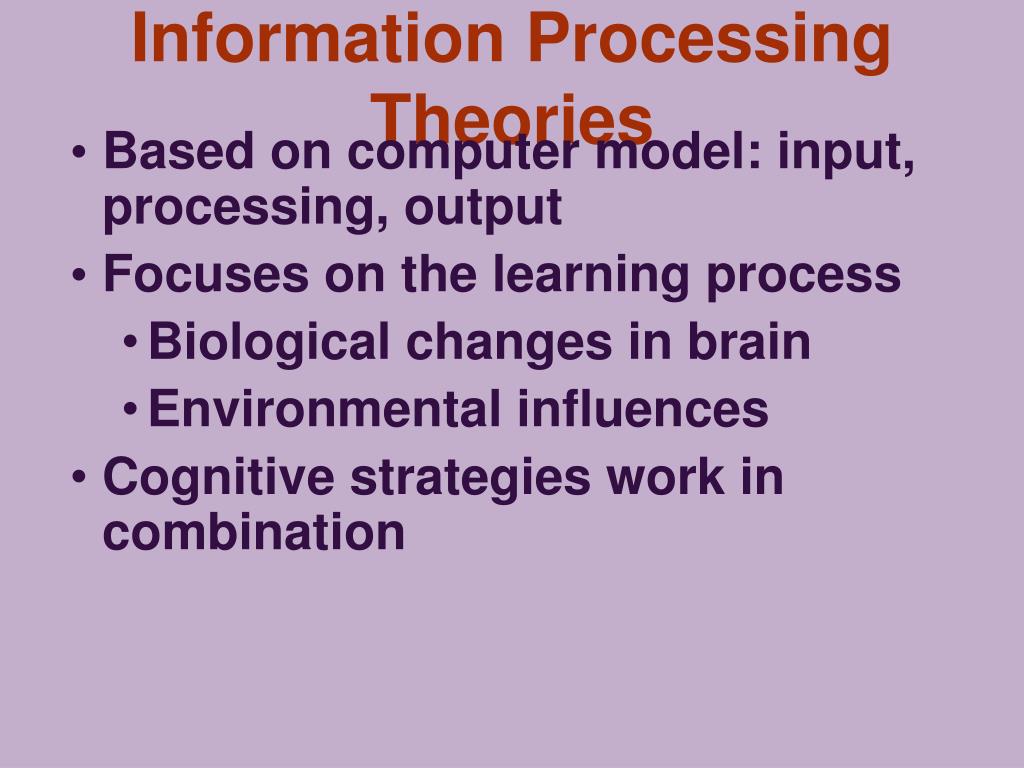
Information Processing Theories. Based on computer model: input, processing, output Focuses on the learning process Biological changes in brain Environmental influences Cognitive strategies work in combination. Information Processing Model. Cognitive Processes. Attention Memory
Information Processing Theories - slide 1
01 / 6Information Processing Theories
1 / 17

Download Presentation

Information Processing Theories
An Image/Link below is provided (as is) to download presentation

Download Policy: Content on the Website is provided to you AS IS for your information and personal use and may not be sold / licensed / shared on other websites without getting consent from its author.Content is provided to you AS IS for your information and personal use only. Download presentation by click this link. While downloading, if for some reason you are not able to download a presentation, the publisher may have deleted the file from their server.During download, if you can't get a presentation, the file might be deleted by the publisher.

E N D

More Related Content

Presentation Transcript
  1. Information Processing Theories • Based on computer model: input, processing, output • Focuses on the learning process • Biological changes in brain • Environmental influences • Cognitive strategies work in combination

  2. Information Processing Model

  3. Cognitive Processes • Attention • Memory • Problem-solving • Metacognition • Cognitive self-regulation / Self-regulated learning

  4. Memory • Where it’s stored • Sensory register • Working memory / short-term memory • Central executive • Long-term memory • Processing speed • Myelination • Experience • Automaticity • Capacity

  5. Storing & Using Memory • Encoding • Scripts • Rehearsal • Organization • Elaboration • Retrieval • Recognition • Recall

  6. Other Cognitive Processes • Problem-solving • First physical, then mental • Metacognition • Theory of mind • Understanding of own learning • Cognitive self-regulation / self-regulated learning • Executive function / central executive