Exploring Human Ingenuity: Learning, Community, Environment, and Health
This overview delves into the five areas of interaction critical to understanding human ingenuity: Approaches to Learning, Community and Service, Human Ingenuity, Environment, and Health and Social Education. Each area encourages exploration of key questions about learning, community responsibility, creative processes, environmental stewardship, and personal health. By fostering critical thinking, collaboration, and social awareness, students will cultivate the skills necessary to contribute positively to their communities and the world.

Exploring Human Ingenuity: Learning, Community, Environment, and Health
E N D
Presentation Transcript
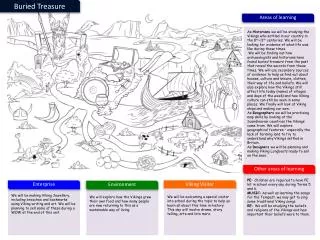
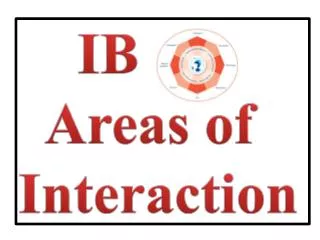
Areas of Interaction Five Organizing Elements
Now known as HUMAN INGENUITY
1. Approaches To Learning-Key Questions • How do I learn best? • How do I know? • How do I communicate my understanding?
ATL Components • Organization • Collaboration • Communication • Informational Literacy • Reflection • Problem Solving • Critical Thinking • Subject-specific Understanding • Interdisciplinary conceptual understanding
2. Community and Service • How do we live in relation to each other? • How can I contribute to the community? • How can I help others? • How are communities similar? • How can I make a difference? • How are communities different?
Community and Service • Starts in the classroom and extends beyond it, requiring students to participate in the communities in which they live. • Emphasis on developing community awareness and concern, sense of responsibility, and the skills and attitudes needed to make an effective contribution to society.
Community and ServiceComponents • Sensitivity to needs of the community and society in general • Awareness of the role individual in society • A willingness to respond to the needs of others • An altruistic attitude which enriches the life of the student through enhanced insight into different social patterns and ways of life.
3. Human Ingenuity • Why and how do we create? • What are the consequences? • Man the Maker-Homo Faber
Human Ingenuity Components • Origin- individual desire to create, develop, or change. • Process- involved in the creation, development, or change. • Product- what has been created. • Context- placing the product in context. • Impact- impact of this creation on individuals, society, and the world. • Development- subsequent developments and change.
4. Environment • Where do we live? • What resources do we have or need? • What are my responsibilities?
Environment Components • Natural and Manmade • Gravity and scope of environmental issues • Conservation and the role of local and international organizations responsible for protecting our environment • Concepts of sustainable development • Political and cultural dimensions of environmental issues • Ways in which environments are transformed • Controlled, preserved, or destroyed by people.
5. Health and Social Education • How do I think and act? • How am I changing? • How can I look after myself and others?
Health and Social Education Components • Looking after ourselves • Health, diet, stress management, leisure and fun, mental illness • Understanding ourselves: need and wants, personal identity, emotional development, spiritual awareness, self assessment, accepting responsibility • Ourselves and others: interpersonal skills, relationship skills, understanding authority, class, family, community • Ourselves in the wider society: freedoms and responsibilities, cultural, ethnic, socioeconomic differences, racial prejudice and stereotyping, morals and ethics, consumer attitudes and behavior, world living standards, development issues, social justice.