Download
1 / 11
110 likes | 214 Views
This article explores the essential process of photosynthesis, whereby plants convert raw materials into their own food. It details how carbon dioxide enters the leaves, water is absorbed through the roots, and sunlight triggers chemical changes leading to food production. It highlights the conservation of matter with specific molecules involved—6 CO2 and 6 H2O consumed, resulting in glucose (C6H12O6) and oxygen (O2). Additionally, it touches on respiration, explaining how various organisms derive energy from organic molecules, providing a comprehensive understanding of these vital biological processes.

E N D
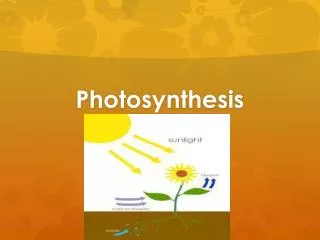
Photosynthesis By Kyle Boone and Liz Burd The process by which a plant turns raw materials into its own food.
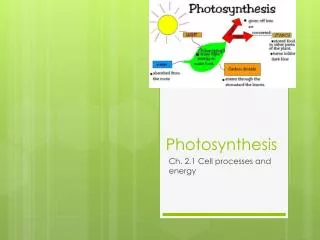
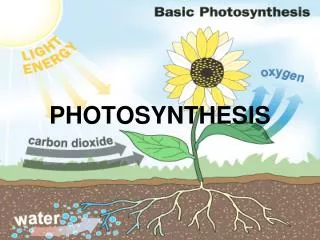
1. Carbon dioxide enters through leaf. 2. Water enters through roots.
3. Sunlight causes chemical change. 1. Carbon dioxide enters through leaf. 2. Water enters through roots.
3. Sunlight causes a chemical change. 1. Carbon dioxide enters through leaf. 4. Plant makes food. 2. Water enters through roots.
3. Sunlight causes a chemical change. 5. Leaf gives off oxygen. 1. Carbon dioxide enters through leaf. 4. Plant makes food. 2. Water enters through roots.
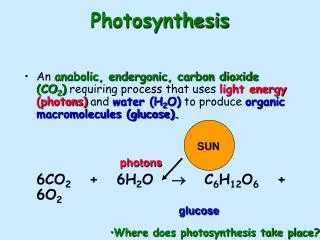
Conservation of Matter 6 molecules of carbon dioxide (6CO2) and 6 molecules of water (6H2O) are consumed in the process, while glucose (6O2), and six molecules (6O2), and six molecules of water (6H2O) are produced.
Respiration C6H12 O6 CO2 + H2O + Energy Molecules
The definition of Respiration Any of various analogous metabolic processes by which certain organisms, such as fungi and anaerobic bacteria, obtain energy from organic molecules.