Exploring the Romantic Age: Socio-Political Influences and Literary Characteristics
This presentation examines the Romantic Age through the lens of socio-political factors such as the Industrial Revolution, the French Revolution, and the emergence of class consciousness. It delves into the defining characteristics of Romanticism in literature, highlighting themes of nationalism, love of nature, and the supernatural. Key figures including Mr. Darcy, Lord Byron, and Shelley are explored, alongside the concept of the Romantic hero, who is often rejected by society, embodying deep emotionality and self-criticism. Join us in discovering this rich cultural period.

Exploring the Romantic Age: Socio-Political Influences and Literary Characteristics
E N D
Presentation Transcript
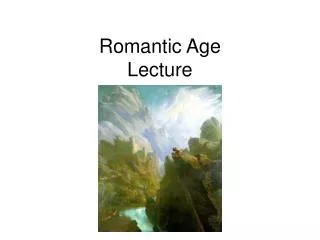
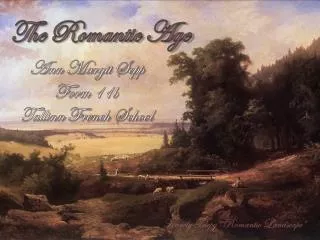
Ann Margit Sepp Form 11b Tallinn French School The Romantic Age Karoly Telepy “Romantic Landscape”
Socio-political reasons • Awakening of class-consciousness • Religious oppression • Colonial policy • Industrial revolution • French revolution • Defeat of Napoleon
Characteristics of Romanticism ... In literature • Nationalism • Unknown, far away places - exoticism • Love of nature • Love of the common man • The supernatural • Emotionality • The romantic hero
The Romantic Hero • Rejected by society • Has himself as the center of his existence • Wanderlust, melancholy • Regret for his actions, self-criticism Examples: • Mr Darcy, Don Juan, Werther
The two generations • In Britain only First generation • Lake poets: W. Wordsworth, S.T. Coleridge Second generation • Lord Byron, Percy Bysshe Shelley, Mary Shelley, John Keats
Romanticism: mainland Europe • Germany • France • Russia