Engaging Water Cycle Lessons for Middle School Earth Science Students
This resource outlines an effective Earth Science lesson plan focused on the water cycle for 7th-grade students in a suburban middle school. Approximately 107 students participated, including those with IEPs, and various assessment methods were used to gauge understanding. The curriculum emphasizes the importance of biogeochemical cycles, the transfer of energy between various earth systems, and freshwater availability. Teachers are encouraged to enhance lessons with hands-on lab experiences and group activities. Overall, this lesson plan proves to be impactful and is set for implementation next year.

Engaging Water Cycle Lessons for Middle School Earth Science Students
E N D
Presentation Transcript
Water Cycle Dena Fauber WOSAT 2006-07 Earth Science 7-10
Setting • Suburban Middle School • Approximately 1000 students • 107 7th grade students participated • 16 students on IEP's, (including 2 selectively mute & 2 CD)
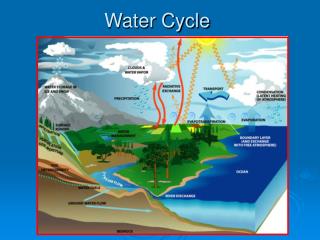
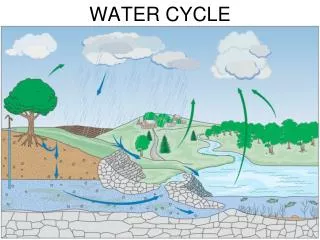
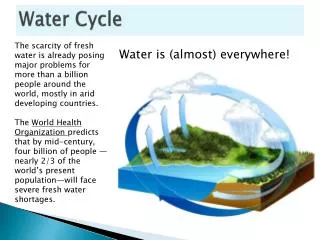
Indicators • 6-8 Earth and Space Science/Benchmark C 1. Explain the biogeochemical cycles, which move materials between the lithosphere (land), hydrosphere (water) and atmosphere (air). 3. Describe the water cycle and explain the transfer of energy between the atmosphere and hydrosphere. 4. Analyze data on the availability of fresh water that is essential for life and for most industrial and agricultural processes. Describe how rivers, lakes and groundwater can be depleted or polluted becoming less hospitable to life and even becoming unavailable or unsuitable for life.
Assessments • Pretest- • KWL • Formative Assessments • Group Song • Graphing • Poster • Written Assessment (extension questions & lab observation) • Summative Assessment- • Concept Graphing
Recommended Changes • Water Cycle Model • Done as a teacher demonstration but would divide students into group and present it as a lab. Requires more time and additional supplies but would make a greater impact on students.
Overall Reflection Loved It! Will teach it again next year!