Understanding Digestion and Nutrient Absorption in the Human Body
180 likes | 290 Views
Learn the hierarchy of the human body from cells to organ systems, emphasizing the importance of digestion in breaking down large molecules for cellular use. Explore the functions of enzymes, organs like the stomach and intestines, and processes like peristalsis for optimal nutrient absorption.


Understanding Digestion and Nutrient Absorption in the Human Body
E N D
Presentation Transcript
Digestion Chapter 6.1
The hierarchy of the human body • The body is composed of cells • Tissues consist of groups of cells with a common structure and function • Organs consist of tissues with common structure and function • Organ systems consist of organs with common structure and function • Physiology: the study of how organ systems in the body interact with each other
DIGESTION • Digestion: taking large molecules and breaking them apart so that the body can use them • It is essential because these large molecules cannot get through the lipid bilayer of the cell. • Once broken apart, their monomer can pass through (like amino acids or glucose molecules)
6.1.1: Explain why digestion of large food molecules is essential • Large molecules (like proteins, lipids, and starches) are made of smaller subunits (amino acids, glycerol/fatty acids, and glucose) • Our body needs to break down the polymers into monomers (hydrolysis) to be broken down into macromolecules that are useful to us • Ex: egg white – serine (aa) – used for protein synthesis
6.1.2: Explain the need for enzymes in digestion • Enzymes: specialized proteins with an active site that creates an environment for specific chemical reactions to occur • Enzymes not only allow reactions to occur, they lower the activation energy required for the desired reaction so it can happen more quickly • Digestive enzymes help to catalyze hydrolysis reactions • Each enzyme is specific for a specific food type
6.1.3: State the source, substrate, products and optimum pH conditions for 1 amylase, 1 protease, & 1 lipase
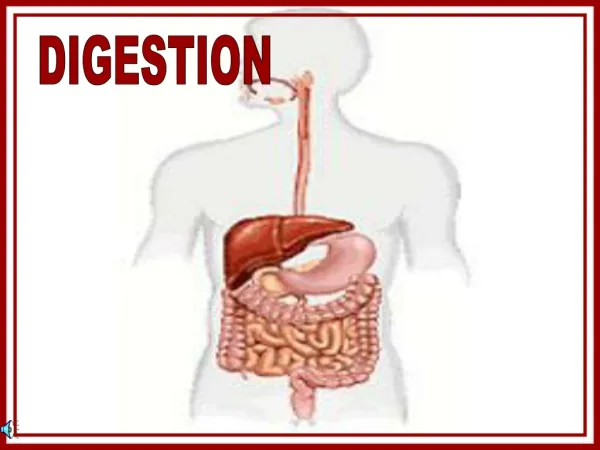
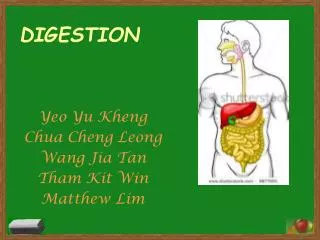
6.1.4: Draw and label a diagram of the digestive system • To be done on the board in class
Define peristalsis and describe its role in the digestive tract • Peristalsis: sequential series of smooth muscle contractions to move food down the digestive tract • Pushes and churns the food (bolus) as it makes its way from the mouth to the anus
List the functions of saliva • After chewing and breaking up food (increasing the surface area), saliva has the following functions: • Mucin (glycoprotein): protects the mouth and makes food slippery • Buffers: prevent rotten teeth by neutralizing acid • Antibacterial agents • Salivary Amylase: begins digestion of starch
Describe the function of the esophagus • Esophagus: moves food from pharynx to the stomach • Voluntary swallowing, involuntary peristalsis • Starches continue digestion
6.1.5: Outline the function of the stomach, small intestine, and large intestine • Stomach: functions in the following- • Storage of food and water • Gastric juice: • acidic fluid (HCl) breaks up cells and kills bacteria • pepsin for protein digestion • Mucus to protect lining of stomach from HCl • Mix-churn food becoming acid chyme
6.1.5: Outline the function of the stomach, small intestine, and large intestine (continued) • Small Intestine: where most absorption and food breakdown occurs • Duodenum: upper portion • Secretions from accessory organs combine to assist in digestion: • Bile from liver & gallbladder • Trypsin, lipase, amylase & bicarbonate from pancreas • Jejunum & Ileum: absorption
Explain how chyme is moved through the small intestine • Peristalsis churns and pushes the chyme through the portions of the small intestine
Explain the function of bile, describe where it is produced and stored, and describe its composition • Bile: produced in the liver, stored in the gall bladder • Contains bile salts which make fats soluble and digestible • Contains iron from hemoglobin of RBCs • Bile molecules insert themselves between lipid molecules preventing lipids from forming large globules
6.1.5: Outline the function of the stomach, small intestine, and large intestine (continued) • Large Intestine:reabsorbs water • Water is released into the digestive tract to help with food breakdown • Water must be reabsorbed by the body to prevent dehydration • The solids that remain (feces) are eliminated
6.1.6: Distinguish between absorption and assimilation • Absorption: active or passive uptake of nutrients • The cell taking in amino acids from the small intestine • Assimilation: Conversion of nutrients into useful substances in the body • The cell using those amino acids to build proteins
6.1.7: Explain how the structure of the villus is related to its role in absorption and transport of the products of digestion • Villus: large finger-like fold in the intestinal wall
6.1.7: Explain how the structure of the villus is related to its role in absorption and transport of the products of digestion (continue) • Each Villus has microscopic folds called microvilli • These folds upon fold increase surface area • The small intestine’s purpose is to breakdown and absorb nutrients – the more area possible to do this, the more efficient the process