Download
1 / 10
100 likes | 228 Views
Digestion is the intricate process through which food is broken down into absorbable units. Key organs involved in the gastrointestinal (GI) tract include the mouth, stomach, and intestines. This multifaceted process involves the action of digestive enzymes, hydrochloric acid, and bile, which facilitate the breakdown of food. Peristalsis, the wave-like contractions of the GI tract, moves contents along, while microvilli and crypts in the small intestine are crucial for nutrient absorption. Nutrients are either transported via blood to the liver or through lymph, impacting overall health.

E N D
Digestion – the process by which food is broken down into absorbable units
The key organs of the gastrointestinal (GI) tract are the stomach and the intestines.
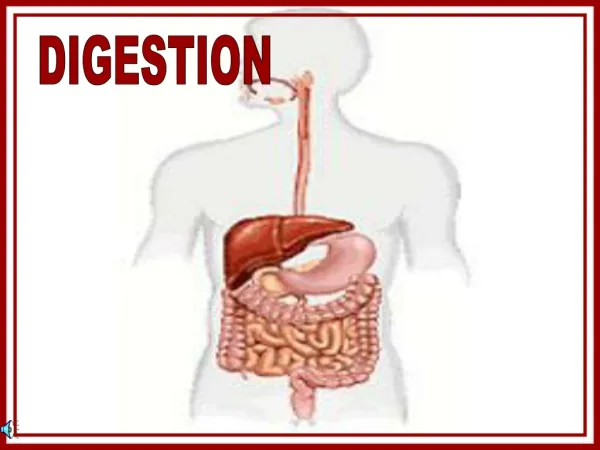
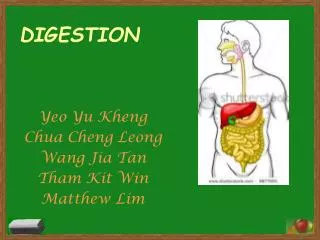
This includes: • Mouth • Pharynx • Salivary glands • Trachea • Esophagus • Sphincters • Stomach
Liver • Gallbladders • Bile duct • Small intestine • Large intestine • Pancreas • Rectum • Anus
Peristalsis – wavelike muscular contractions of the GI tract that push its contents along Digestive enzymes – proteins found in digestive juices that act on food substances, causing them to breakdown into simpler compounds Hydrochloric acid – found in stomach
Bile – emulsifies fat; made by liver and stored in gallbladder Absorption – the uptake of nutrients by the cells of the small intestine for transport into either blood or lymph
Microvilli – tiny projects on each villi in the small intestine that trap nutrient particles and transport them into cells Crypts – tubular glands that lie between intestinal villi and secrete intestinal juices into the small intestine
Nutrients are transported via blood and lymph. Nutrients leaving the digestive system via the blood are routed directly to the liver before being transported to the body’s cells; those leaving via lymph eventually enter the vascular system but by-pass the liver at first.