The Role of Glycolipid Transfer Proteins in the Intermembrane Transfer of Glycosphingolipids
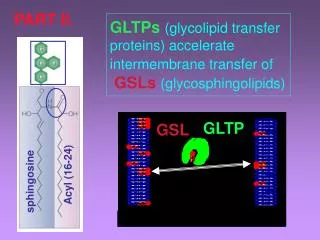
Glycolipid transfer proteins (GLTPs) play a crucial role in the intermembrane transfer of glycosphingolipids (GSLs), which are vital for cellular differentiation, growth, and signaling. With acyl chain lengths ranging from 16 to 24 carbons, these sphingosine-based GSLs regulate essential processes, including apoptosis and cell development. The structural dimers of GLTPs feature a head group recognition center, facilitating the effective transport and function of GSLs within membranes, thereby influencing various cellular outcomes.

The Role of Glycolipid Transfer Proteins in the Intermembrane Transfer of Glycosphingolipids
E N D
Presentation Transcript
GLTP GSL PART II. GLTPs(glycolipid transfer proteins) accelerate intermembrane transfer ofGSLs (glycosphingolipids) Acyl (16-24) sphingosine
GSLs (glycosphingolipids) are key regulators of cellular • differentiation • growth • development • signaling • apoptosis
sphingosine-out sphingosine-in