Understanding Literary and Visual Elements: Techniques, Structures, and Tools
This comprehensive guide explores key concepts in literature and visual media, focusing on persuasive techniques, narrative structures, and critical elements of plot. Learn about the various types of maps and their uses, as well as essential components such as glossaries, indices, and tables of contents. Uncover the meanings behind bias, propaganda, and stereotypes in storytelling. This resource provides insights into plot development, character conflict, and the significance of various literary devices. Enhance your understanding and appreciation of texts with this structured approach to analysis.

Understanding Literary and Visual Elements: Techniques, Structures, and Tools
E N D
Presentation Transcript
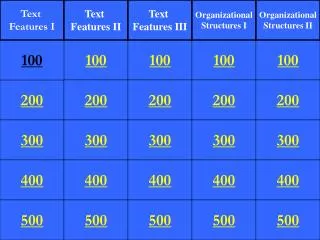
Text features Persuasive Techniques Structures/ patterns Maps Charts graphs Elements Of Plot 100 100 100 100 100 200 200 200 200 200 300 300 300 300 300 400 400 400 400 400 500 500 500 500 500
List of major parts of a book. Gives page numbers and where you can find each part
List of all the names and places in a book. Alphabetical order.
Gives you clues about what you will find in each section of the book.
Taking a quality of one individual and applying it to every individual in the group.
Example: A bunch of good looking kids all drinking Kool-Aid in clear glasses.
Example: an author has written about all the animals that make great pets, but you can tell the author really likes cats.
First, next, then, finally, before,afterward, meanwhile,and last year…..
Comes after the climax. Explains how the conflict is resolved.
Part of the story that is the turning point. Most exciting and interesting part. Character confronts the problem.
Composed of secondary events in literature. Involves a second conflict occuring the same time.
Situation that occurs at the same time and mirrors the main plot.