Download
1 / 9
90 likes | 241 Views
This text delves into the philosophical contrasts between idealism and materialism, as exemplified through the thoughts of Plato and Aristotle. Plato asserts that universal ideas, being eternal and clear, are more real than the changing material world, arguing that knowledge originates from these pure ideas we preexistently knew. Conversely, Aristotle argues that true knowledge arises from sensory experience and the human soul's capacity to interpret it, emphasizing the importance of individual material objects. This discourse shapes the philosophical foundations for thinkers like St. Thomas Aquinas.

E N D
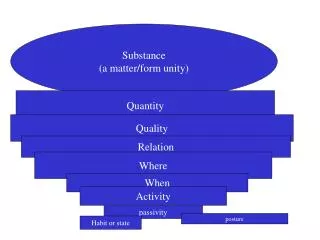
Prime Matter Substantial Form
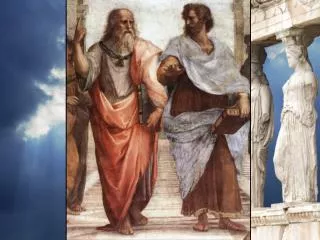
Reacts against Democritus (a materialist) • Recognizes that human beings know universal and immaterial ideas. • These ideas are more perfect (thus more real) than what we know by our senses. (eg circle) Plato
The Material world is “shadowy”, limited, changing, etc. While our ideas are clear, eternal, universal, stable… • Idealist – our knowledge comes from pure ideas we “foreknew” before our soul entered our body. • Sense data reminds us what we already know. Plato World of Ideals
Agrees with Plato that ideas transcend material reality. • Disagrees though on how man comes to know ideas. • Believes man has the power to discern the universal ideas in the particular (individual) material objects. Aristotle
To know man must use the experience of his bodily senses and the power of his soul to form true knowledge of ideas. • Ideas are not then found in the “World of Ideals” but are encased in particular material creation. Aristotle World of Ideals
ACT vs Potency • Final human desire and (ultimately) only human motivation is Happiness. • Friendship the key relationship. • Formed bases for the Philosophy of St. Thomas Aquinas Aristotle