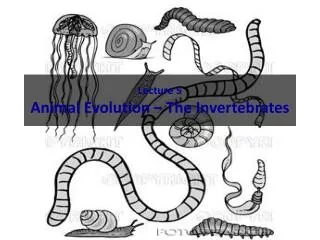
Lecture 5 Animal Evolution – The Invertebrates
30 likes | 143 Views
This lecture explores the fascinating world of mollusks, which are bilateral, soft-bodied invertebrates featuring a small coelom. Most possess a calcium carbonate shell and a unique mantle that drapes over their bodies, providing protection. Key biological traits include gills for gas exchange and a fleshy foot for locomotion. Many mollusks also have a radula, a specialized tongue-like organ used for feeding on algae and other organisms. Sizes vary widely, from tiny snails to giant predatory species. Delve into their evolutionary significance and diverse adaptations.


Lecture 5 Animal Evolution – The Invertebrates
E N D
Presentation Transcript
5. Mollusks • Bilaterial, soft-bodied animals with a small coelom. • Most have calcium carbonate shell & proteins secreted from the cells of a tissue that drapes like a skirt over the body mass - known as mantle. • Gill - organ used for gas exchange. • Most have fleshy foot. • Many have radula • Radula: • tounge-like, toothed organ that rasps algae & other organisms & draw them into the mouth. • Size ranges from tiny snail to giant predators.