Microscopes
In this engaging 4th-grade project, students learn about dissecting and compound microscopes. They will explore the functions and differences of each microscope type, such as low magnification for large objects with the dissecting microscope (2x-50x) and high magnification for fine details with the compound microscope (40x-1000x). Students will participate in group activities at various stations, read informational cards, and answer worksheet questions to enhance their understanding of how microscopes aid in studying the diversity of animal life in the Kingdom Animalia.

Microscopes
E N D
Presentation Transcript
Microscopes 4th Grade NMGK-12 Project #76
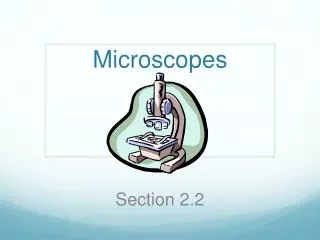
Dissecting Microscope • low magnification • approximately 2 to 50 times larger than life • used to see some detail on large objects (whole animals) • use a light source that shines from the top
Dissecting Microscope magnification knob arm eyepiece head objective light focus knob base
Compound Microscope • higher magnification • 40 to 1000 times larger than life • used to view fine detail on small, thin objects • light is transmitted through the object from underneath • usually use a slide to hold object
Compound Microscope eyepiece objectives coarse focus knob stage fine focus knob light base
Using the Microscope • do not move the microscopes • use only the fine focus knobs on the compound microscopes • focus SLOWLY • use both eyes (do not close one)
Animal Diversity 4th Grade NMGK-12 Project #76
Kingdom Animalia • many cells • eat other organisms (plant or animal) to get energy • live on land or in water (fresh or salt) • move somehow
Activities • break into groups of 4 or 5 • go to one of the 8 stations • read the information on the card • answer the questions on your worksheet