Download
1 / 60
600 likes | 709 Views
Chapter 15 delves into the fragmented response to the Civil War's outbreak in 1861. President Lincoln called for 75,000 troops to suppress what he deemed a rebellion, while Southern states like Virginia and Arkansas seceded, joining the Confederacy. Border states, such as Kentucky and Missouri, showcased divided loyalties, with some refusing to send troops. Both sides faced challenges, from resource allocation to troop morale and strategies aimed at outmaneuvering the other. The First Battle of Bull Run exemplified the war's devastating realities and shattered Northern hopes for a swift victory.

E N D
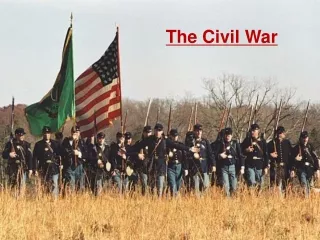
The Civil War Chapter 15 Section 1 – The Call to Arms
Taking Sides in the War - North • Lincoln declared that a rebellion existed • Called the nation’s governors for 75,000 troops • Men eagerly signed up • Some states wanted to send more than requested
Taking Sides in the War - South • Tennessee, Kentucky, Missouri – refused to send troops • Maryland and Delaware did not respond • Virginia seceded April 17th • Arkansas, Tennessee, North Carolina seceded in May • 50 counties in western Virginia did not support slavery and refused to secede • Admitted into the Union as West Virginia • 1863 • Free state
Border States • Border states – slave states that did not secede • Kentucky – important control of Ohio River • Declared itself - neutral • Generals wanted to occupy KY • Lincoln refused, fearing occupation would tip it to secede • September 1861 – South invaded KY – joined the Union • Missouri – sided with the Confederacy • Lincoln sent troops – set up own state government • Stayed with the Union throughout the war • Maryland • Washington,DC-would be surrounded if part of Confederacy • Southern sympathizers destroyed railroads/telegraph lines • Lincoln declared martial law (military is in charge, citizens’ rights are suspended) • Officials suspected of disloyalty were jailed without trials
North against south • Southern Advantages • Military Advantage that the North would have to invade the South • Confederates would be fighting on own territory • Most of the experienced military officers were Southerners • Robert E. Lee, Joseph E. Johnston, Albert S.Johnston – all resigned from the US Army to fight for South
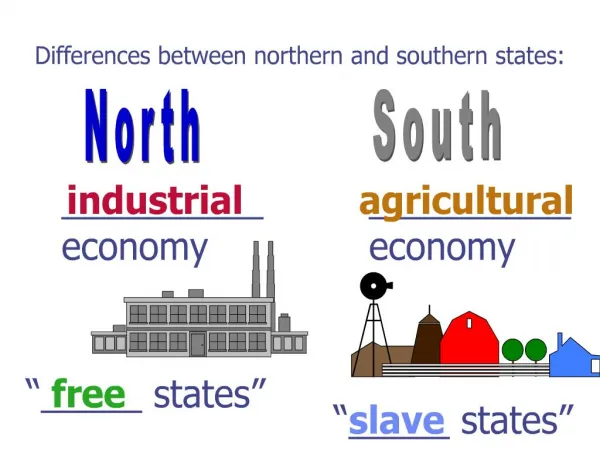
North against south • Northern Advantage • 1861 – US had 130,000 factories – 110,000 – North • Twice the railroad track • Twice the farmland • Two-Thirds population in North • One-third of the South’s population – slaves • North had more resources to field, feed, and equip larger armies
Strategies of the North • Union leaders hoped for a quick victory • Lincoln ordered naval blockade of seaports • Cut off supplies of manufactured goods • Prevent overseas sale of cotton • Gain control of Mississippi River • South’s major transportation link • Split the South in half • Invade Virginia • Confederate Capital - Richmond – only 100 miles from Washington, DC
Strategies of south • No need to invade the North • Defend their land until North tired of fighting • Hoped to get support from Britain/Europe • Hoped Britain’s need of cotton would force them to support South
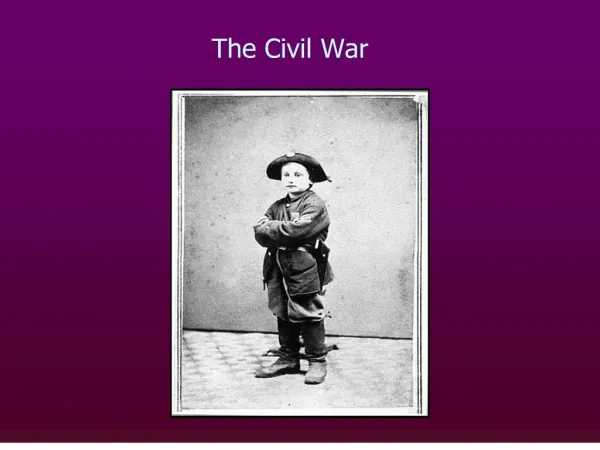
Americans against americans • Families had members fight for both sides • Mary Lincoln’s four brothers fought for South • 1 million Southern white males • ¾ fought (age 18-45) • 3.5 million Northern white males • 2/3 fought (age 18-45) • ½ Northern troops – farmers • ¼ - Northern troops – immigrants • Some as young as 14
A Soldier’s life • Beginning – 10 hours a day – training • Stayed in camp • Fresh, clean water – hard to maintain • Food – hardtack - dry cracker – carried in pack • Wet weather – life miserable • Lucky had tents – most slept outside • Disease hard to control – typhoid fever, smallpox
Prisoners of war • Both sides – prison camps • 10% deaths occurred in prison camps • Elmira, New York – worst in North • Andersonville, Georgia – worst in South • Inhumane conditions • Little food • Death by starvation/exposure • Overcrowded
First battle of bull run • Union General Irvin McDowell • Wanted time to train troops • Newspapers demanded capture of Richmond • 30,000 troops marched south into Virginia • Sightseers came in wagons/have picnic/watch • Confederates waited at Manassas, VA • Railroad center • Bull Run – river just north of Manassas • July 21, 1861
First Battle of Bull Run • At first – Union Army pushed forward • Confederate general Thomas Jackson rallied his men to hold firm • Union troops panicked and ran • Sightseerers panicked and fled home, too • Confederates soldiers – too exhausted to pursue • South claimed victory • North was embarrassed
Start of the War • North hopes for a quick victory ended at Bull Run • War would be long • Lincoln needed to find a commander of Union troops
The Civil War Section 2 Early Years of the War
New technology • Weapons were more advanced than strategy • New guns could shoot more accurately, from longer distances • Generals were slow to change tactics and allowed men to charge right into bombardments • Artillery was advanced and attacking armies would bombard long before sending ground troops to battle
Naval technology • Invention of Ironclads • Warships covered with protective iron plates • Cannon fire bounced off the armor • Classic battle of the Monitor and Merrimack • Fought to a draw in March 1862 • Confederates used ironclads to beat naval blockade • Used smaller gunboats up and down the Mississippi River
The war in the east • After the defeat at Bull Run, Lincoln replacedMcDowell with General George McClellan • Good organizer but very cautious • For 7 months he trained his army but did not attack • March 1862 – finally moved • By boat took 100,000 along Chesapeake Bay to a peninsula southeast of Richmond • Advanced toward Richmond against 15,000 Confederate troops • Stopped and requested more troops – a waited month • South reinforced in the mean time • May 31, 1862 – Confederate forces stopped advance • McClellan retreated
Ulysses S. Grant • Graduated from West Point bottom of class • Unsuccessful in the US Army – quit to work in Dad’s store • Given a field command under General Halleck who Lincoln appointed as Commander in the West • Desperate for victories, Lincoln was aware that Grant gained small successes in KY and Tenn. • Different from McClellan • McClellan wore fitted uniforms, arrogant, vain • Grant took chances, wore rumpled clothes, ate and drank with his men, smoked cigars, lived simply in the field
The war in the east • With Richmond safe, Lee decided to invade the North hoping for a victory to turn public opinion and get British support • Lee slipped into western Maryland • McClellan found Lee’s plan-learned that the Confederate army had split in two parts • McClellan attacked Lee at Antietam Creek near Sharpsburg , MD on September 17, 1862 • Union army attacked over and over - lost 12,000 • Lee lost 14,000 – almost 1/3 of army • Lee retreated into Virginia • McClellan did not pursue • No clear winner but because Lee retreated, North claimed victory
The war in the west • Grant made advances in the west taking control of the Mississippi River north of Memphis, Tenn. • Captured Fort Henry on the Tennessee River and Fort Donelson on the Cumberland River • Two water routes into the western Confederacy were wide open. • Grant gained reinforcements and moved south toward Corinth, Mississippi – important RR center • Albert Sidney Johnston stood in his way • Meet at a church called Shiloh • April 6, 1862
Shiloh • Grant/Sherman camped with troops on west side of the Tennessee River • Waiting a month for General Buell to join them from Ohio – plan to join a plunge south to Corinth • Johnston planned to attack before Buell arrived • Beauregard (2nd in command) objected- drew up a plan • 9:30 am Confederates opened fire, charged into Union camps • 8 out of 10 men had not seen any action • Intense fighting in the Peach Orchard and Hornet’s Nest • Johnston himself led a charge – wounded on his leg that nicked an artery – bled to death • Command passed to Beauregard
shiloh • Buell’s reinforcements began to arrive • Federal gunboats shelled the Confederate camp overnight • At dawn the next day Grants 50,000 strong attacked Beauregard’s 30,000 weary troops • Beauregard retreated to Corinth • Halleck removed Grant – took a month to get the army to Corinth – by then Beauregard had fled
Antietam Creek – Eastern Front • Lee decides to attack in the North since he believed that Richmond was safe • Hoped a victory in the North would entice Britain or France to support the South • Slipped into Maryland – McClellan got the battle plans by sheer luck • September 17, 1862 – McClellan attacks Lee near Sharpsburg, Maryland • Bloodiest day of the war
Antietam • Bloodiest day of the war • Union - 12,000 casualties (killed, wounded, missing) • South – 14,000 – almost 1/3 of army • Lee was forced to retreat back to Virginia • McClellan blew a chance to chase Lee and deal the South a fatal blow • Lincoln was upset
Union Fleet captures New Orleans • David Farragut commanded the Union fleet • Entered the Mississippi River from the Gulf • Captured the Mississippi as far north as Vicksburg, Mississippi • Remained a Confederate stronghold • Union ships could not get through • Cannons placed on the bluffs • Needed Vicksburg to control the Mississippi
The Emancipation proclamation Chapter 15 Section 3
Lincoln’s presidency • Initially was against freeing slaves • Avoided aligning himself with abolitionists • Horace Greeley – abolitionist publisher • Lincoln wrote a letter: would not free any slaves or all slaves - if he could preserve the Union, • Abolitionists pressured Lincoln to free slaves • Lincoln worried that this would cause border states to secede • Lincoln’s goal was to restore the Union even if it meant letting slavery continue
Lincoln changes his mind • As the war progressed, Lincoln realized how important slavery was to the war cause in the South • Told his Cabinet that he intended to issue an Emancipation Proclamation • Cabinet told Lincoln to wait until after some Union victories • Lincoln met with the Cabinet after Antietam and indicated he planned to issue the Proclamation • Emancipate means to set free
Emancipation proclamation • January 1, 1863 • Freed slaves – only in areas that were fighting the Union • Had little effect – Union had no power in these states • Did not free slaves in the border states • Criticized and praised • White southerners accused Lincoln of trying to get the slaves to revolt • Union soldiers supported it
Effects of the proclamation • Changed the War into a War against slavery • Ended any possibility that Britain would support the South – they were against slavery • United the African Americans in support of the war • Freed few slaves
African Americans Help the Union • Until the Emancipation Proclamation, blacks could not serve • Encouraged blacks to enlist • Ultimately 189,000 African Americans served • More than half were runaway or former slaves • If captured, most returned to slavery or killed • Navy • Black and white sailors served together • Army • Most served in black-only regiments with white officers at less pay
Blacks support the war • Free blacks served in the Union army • Cooks, wagon drivers, hospital aides • Enslaved blacks in the South • Worked to hurt the Confederate effort • Provided military information to Union • Quietly resisted work • Worked slowly • Damaged equipment • Refused to work
Black Units of merit • 54th Massachusetts Infantry • White leadership • Attacked Fort Wagner in South Carolina • July 18, 1863 • Volunteered to lead the charge • Reached the top before being turned back • Half of the unit were casualties • Movie “Glory” made about them
The Civil War and American Life Chapter 15 Section 4
Divisions over the war • Not all Southerners supported secession • Not all Northerners supported a war to end slavery or to restore the Union
Division in the South • Opposition strongest in Georgia and North Carolina • Regions with large slaveholding plantations had strong support for the war • Poor backcountry regions had less support • Other divisions were political • States rights arguments • SC governor objected to officers from other states leading SC troops • Governors of NC and Georgia did not want conscription of their men
Division in the north • Many opposed the Emancipation Proclamation • Some believed the South has the right to secede • Northern Democrats • Known as Copperheads • Blamed Lincoln for causing the war • Criticized the war and called for peace • Strongest in Illinois, Ohio, and Indiana
Dealing with disruptions • Opponents of war (on both sides) • Disrupted war effort • Convinced soldiers to desert • Helped prisoners of war escape • Tried to prevent men from volunteering • Suspended right of Habeas corpus (constitutional protection against unlawful arrest) • Empowers judges to order imprisoned people to be brought into court to determine if they are being legally held • Lincoln and Davis suspended the right in some places • More than 13,000 people in the North, arrested and held without trial
Draft Laws • Desertion – major problem • Soldiers left units to plant and/or harvest crops • At any time half to third soldiers were AWOL • Draft Laws • South was first to pass Conscription – April 1862 • White men between 18-35 – later 17-50 • Lincoln signed a similar act in 1863 – ages 20-45
Exceptions to the draft laws • Southern exemptions • Men who owned 20 or more slaves • Could hire substitutes • North • Wealthy could pay the gov’t $300 in lieu of service • Complaints that it was a ‘poor man’s war’ • Violent riots in New York City • Factory workers and laborers rioted for several days • Destroyed property • Attacked African Americans and wealthy white men
Economic strains - North • Industries boomed • Draft took away employees – constant shortage • First income tax levied in August, 1861 • Tax on money people earn • Used to pay for the war • Printed currency (paper money) • Caused inflation – general rise in prices • Prices increased an average of 80%
Economic strains - south • Union blockage prevented South for raising money by selling cotton overseas • Inflation • Greater inflation than north • Shortages caused prices to rise • Shoes ($18 in 1862)($800 in 1864) • Food production fell • Union armies destroyed farmland and crops • Food shortages led to riots in some cities
Women in the Civil War • Took over businesses and farms • Became spies • At least 400 disguised as soldiers • Worked in factories, government jobs, teachers • Nursing • Elizabeth Blackwell (first female physician) • Trained nurses • Dorothea Dix, Harriet Tubman • Clara Barton • Angel of the Battlefield • Set up an American branch of the Red Cross
Decisive Battles Chapter 14 Section 5
Confederate victories • Fredericksburg, Virginia • Burnside vs Lee • Burnside marches 120,000 directly to Richmond • Lee met him with 75,000 • Burnside attacked with traditional charges • Burnside lost 13,000 • Chancellorsville, Virginia • Hooker vs Lee • Lee defeats Hooker with force ½ its size • Lee loses Stonewall Jackson in the battle
Gettysburg • Lee believed that a victory on northern soil would force the North to end the war • Crossed into Pennsylvania • North commanded by Meade • Lee’s forward army went into Gettysburg to find shoes • Instead they found Meade’s army • More troops joined both armies • Fought for 3 days with over 51,000 casualties • In the end, North had won; Lee leaves the North – never to return. Meade blows a chance to knock out Lee’s army.
Vicksburg • Grant began siege in May 1863 • Pemberton dug in using caves, shelters • Grant blockades starved out the residents • After six weeks, Pemberton surrendered to Grant -the last stronghold on the Mississippi • Surrendered on July 4th • Turning point of the war in favor of Union
Gettysburg address • Lincoln addressed about 15,000 at the dedication of the cemetery at Gettysburg • Lincoln foretold of a Union victory
Lincoln changed command • Lincoln appoints Grant – Commander of all Union forces • Grant appoints Sherman as the Commander in charge of the Western army • Grant takes over the Army of the Potomac • Immediately decided to attack Richmond