Download
1 / 9
90 likes | 221 Views
Discover the rewarding process of restoring erosion-prone areas by planting native prairie grasses and forbs. Establishing a thriving prairie requires careful planning, including site preparation, proper seed selection, and management for the first few years to control weeds. This sustainable approach benefits the environment and supports wildlife, especially birds and butterflies. With minimal maintenance after establishment, a prairie garden becomes a peaceful haven, perfect for nature study and appreciation. Join us in creating a unique ecological space that will flourish for generations to come.

E N D
Planting a Prairie By Mary Knutson RN, BSN, NFPP MSN Viterbo Student
Planting a Prairie • Restoration of areas to native grasses and forbs (wildflowers) is innately satisfying, especially in erosion-prone areas • Once the prairie is well-established, it takes very little maintenance, except periodic burning for weed control • Very good for the environment and wildlife, especially birds and butterflies
Planting a Prairie • Observe other natural prairies (sometimes called goat prairies) • Decide what grasses and forbs to plant • Research the seed preparation and proper planting time
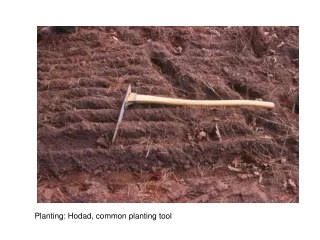
Planting a Prairie • Site preparation is very important • Planting can be done by hand or by a seeder • Weed control is a very big problem for the first 3 years until the prairie plants are well established • Mowing can be very helpful
Planting a Prairie • Seeds are more expensive than the usual garden or grass seeds • Some are in very short supply • You must not dig up plants that are growing wild because ofter the transplanting in unsuccessful, and the wild planting can be irreparably damaged.
Cost of planting a prairie using “Prudent Prairie Mix” from Ion Exchange Native Seed and Plant Nursery
Planting a Prairie • It is worth all the work and cost because it will be there for generations • Peaceful and unique setting • Excellent place for Nature study and appreciation • Enjoy you own prairie garden!