Download
1 / 6
60 likes | 187 Views
This scenario explores the population dynamics of Little Blue penguins in New Zealand as they face increasing challenges from global warming and overfishing. With sardine populations dwindling, these penguins must dive deeper to catch squid, which reside at greater ocean depths. The variation in diving depths within the population illustrates adaptive responses that enhance survival. This discussion will analyze the causes of this variation, the implications of changing food sources, and the potential impact on future generations of penguins, highlighting natural selection's role in population resilience.

E N D
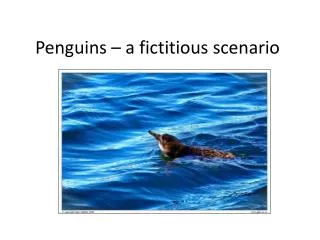
A population of Little Blue penguins living in New Zealand show a lot of variation in diving depth. They dive for sardines.
Penguins also feed on squid but squid are found much deeper in the ocean.
The graph below shows the variation in diving depths of the penguins. Number of penguins Diving depth (m)
Due to global warming and overfishing the sardine population declined to such low levels that penguins are needing to dive deeper to catch squid instead.Explain how the variation in penguin diving depths occurs and discuss how this variation will help the population of penguins to survive and adapt to the new conditions. In your answer, you should consider: • What causes variation within the population. • The effect of needing to fish for squid rather than sardines on different penguins. • What happens to the penguin population over a number of generations.
Individuals with characteristics that help them compete and survive live longer and produce more offspring.