Starting Your Garden: Seedling Basics for New Farmers in America
Discover the essentials of starting seedlings for your farming journey. Learn about seed types, the importance of the USDA Hardiness Zone Map, and tips for successful planting. Every plant has unique needs; ensure you choose the right container and soil mix, and avoid over-seeding. Watering techniques are crucial—keep seedlings moist but not soggy. Prepare your plants for outdoor conditions by gradually acclimating them. Start with easy-to-grow options like cucumbers and squash, while saving more challenging crops like tomatoes for stores or greenhouses.

Starting Your Garden: Seedling Basics for New Farmers in America
E N D
Presentation Transcript
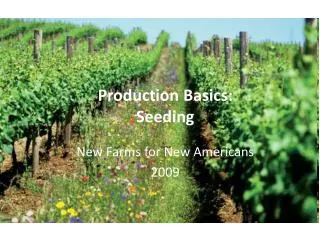
Production Basics:Seeding New Farms for New Americans 2009
What Are Seedlings? Also called a plug, a transplant, a start
How to Start Plants • Every plant is different and should be seeded at a different time. • Choose the right container • Use good soil (seed starter mix, or germination mix) • Don’t over seed- bury seeds at twice their depth • Water often, but do not over water • 1-2 weeks before planting time, bring the seedlings outside to get them used to the cooler weather. Bring them in at night. Increase their time outside everyday.
Starting Seeds is Easy as 1, 2, 3… 1. Fill the tray with soil. 2. Divide seeds up into tray cells. 3. Push seeds just below the soil.
Best Plants to Start at Home • Cucumber • Watermelon • Summer Squash (zucchini) • Winter Squash • Swiss Chard • Kale More difficult, you should buy from store or greenhouse: Tomato, Peppers, Okra, Eggplant.