Download
1 / 12
120 likes | 264 Views
Explore the intricate world of medieval feudal Europe through the lens of fiefs, manors, and the lives of peasants. Discover how nobles exchanged land for loyalty, the role of lords in justice and taxation, and the stark differences between serfs and freemen. Learn about the self-sufficient lifestyles of peasants, their harsh living conditions, and agricultural practices, including the fallow method to restore soil fertility. This overview sheds light on the socio-economic dynamics that defined life in the Middle Ages.

E N D
VOCABULARY • Toll peaje, portazgo, a tax about trade • Mill molino • Demesne reserva, lord’s land, private land. • Tithe diezmo, 10% they pay to the Church • Fallow barbecho
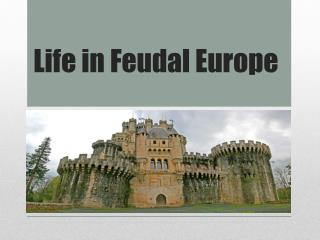
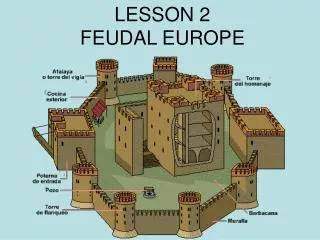
What was a fief • Nobles received land in exchange for swearing allegiance to the king. This land was called fief or manor (manso). • Each manor has a castle and villages. • Part of the land on the fief, called demesne, was used by the lord himself. • The Lord also rented (alquilaba) plots (porción) of land to the peasants • The rent was paid in money, products or work on the lord’s land continue
The fief (…continue) • The fief or manors also had large forest which belonged to the lord and he decided when the peasants could hunt there • The lords administered justice and collected taxes. The peasants had to pay a tax to use the mill or the oven. • The lords also took a toll, or tax, from the merchants who crossed their bridges and their land
Serfs (siervos) and Freemen • Ninety percent of the population were peasants. Most lived on a fief and worked on the lord’s land. However (no obstante), there were differences between them: • Some peasants were serfs. They were completely subjected to the Lord’s authority. They could not leave the fief or get married without permission. Serfdom was heritable • Other peasants were freemen. They could leave the fief and take personal decisions. They paid a tithe, a percentage of the harvest (cosecha), to the Church
EVERYDAY LIFE AND WORK • The peasants usually lived in small villages. Their houses were made of mud (barro, adobe) and wood, and had one room. • People and animals often lived together • Peasants were self-sufficient. They grew food, made clothes and furniture • They rarely ate meat or fish. Life was hard. • The whole family worked from sunrise to sunset. They used very basic tools • They had no fertilisers. Every year they left half of their land fallow so that it could recover and become fertile again. • As a result, agricultural production was very low. Floods (inundaciones) and plague caused deaths.
Links… • http://medievaleurope.mrdonn.org/fiefs.html • http://medievaleurope.mrdonn.org/powerpoints.html • http://www.middle-ages.org.uk/fief.htm • http://www.middle-ages.org.uk/serfs.htm • http://www2.lhric.org/irvington/ims/6th/serfs.htm
ACTIVITIES • True or false? • A fief or manor was a castle • Everything grown on a demesne belonged to the lord • The lords allowed merchants to cross their land and bridges free of charge • Serfs or Freemen? • They could not get married without permission • They could take personal decisions • They paid a tithe to the Church • They could leave the fief