Download
1 / 3
30 likes | 168 Views
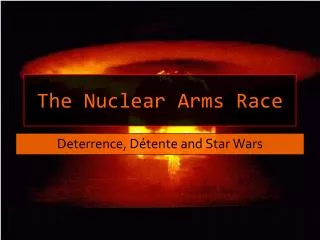
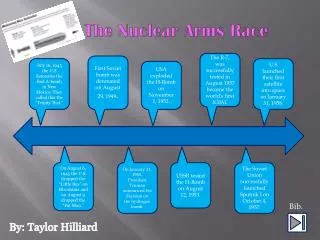
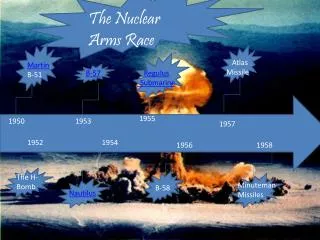
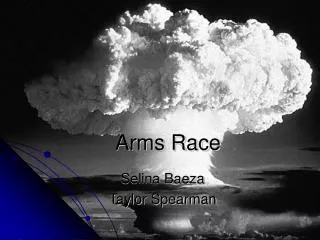
The late 1940s and early 1960s marked a critical period in the Cold War, characterized by an intense arms race between the United States and the USSR. In 1949, the USSR tested its own atomic bomb, shocking the U.S. as China emerged as the People's Republic. By 1952, America detonated a hydrogen bomb, solidifying the doctrine of Mutually Assured Destruction (MAD). Under leaders like Eisenhower and Khrushchev, strategies shifted but tensions remained high, culminating in the construction of the Berlin Wall in 1961 as a symbol of division.

E N D
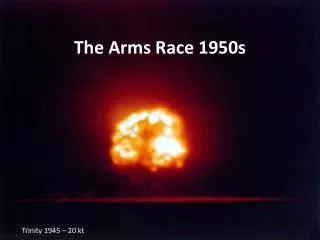
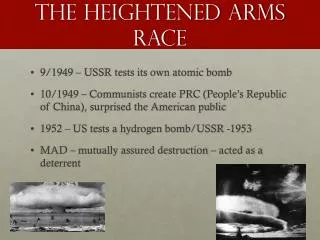
The Heightened Arms Race • 9/1949 – USSR tests its own atomic bomb • 10/1949 – Communists create PRC (People’s Republic of China), surprised the American public • 1952 – US tests a hydrogen bomb/USSR -1953 • MAD – mutually assured destruction – acted as a deterrent
New Leaders • Eisenhower – favored a policy of massive retaliation (Sec. of State – John Dulles) • Favored a policy of massive retaliation • “bigger bang for the buck” • Nikita Khrushchev – became leader of USSR (Stalin died in 1953) • Called for peaceful co-existence with the West • Brutal repression of Europe • 1961- Berlin Wall built