Comprehensive Guide to Robotics Design and Development Process
This document outlines the structured process of designing and developing a robot, covering essential steps such as brainstorming, designing, project development, testing, and refining. It emphasizes team collaboration, adherence to rules and regulations, and the importance of developing strategies for maneuverability, speed, and autonomous operation. Detailed guides on using CAD for design representation and accuracy ensure all components work cohesively. The project culminates in thorough testing and refinement, tailoring the robot's capabilities to meet design specifications effectively.

Comprehensive Guide to Robotics Design and Development Process
E N D
Presentation Transcript
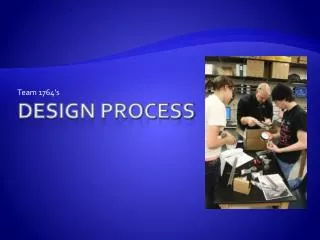
Team 1764’s Design Process
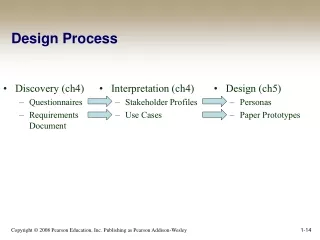
Design Steps • Rules and Regulations • Game Brainstorming • Design Brainstorming • Design Development • Project Development • Test and Trials • Refining
Rules and Regulations • Break into groups • Go through the rule book • Test the rules
Game Brainstorming • Brainstorm different strategies • Rank the importance of different aspects of the robot for different strategies • Maneuverability • Autonomous Mode • Speed • Choose a strategy • Develop a Design Statement
Design Brainstorming • Determine the systems necessary to fulfill the Design Statement • Frame • Design Train • Lifter • Minibot • Brainstorm designs for each system • Use a Design Matrix and group discussion to decide on which designs to follow • Develop a Design Solution based on your decisions
Design Development • Design detailed and accurate representations of each system with CAD • Correct the errors found when putting dimensions and components into the basic designs • Design specialty parts for the robot • Determine sizes for parts that need to be cut and edited • Make all systems work together • Design the robot in CAD
Project Development • Robot is built based on the CAD • Specialty parts are built • Materials are cut based on CAD designs • Components are placed based on assemblies
Test and Trials • Test finished robot for major system failures • Specific and continuous testing of all systems
Refining • Components tweaked on CAD designs and on the robot to maximize robot’s ability to fulfill the Design Solution