Download
1 / 7
80 likes | 199 Views
Conflict is a crucial element in literature, driving narratives and character development. There are two main categories of conflict: internal and external. Internal conflict refers to a struggle within a character, often between conflicting desires or decisions (Person vs. Self). External conflict involves struggles outside the character, including Person vs. Person, where characters oppose each other's goals; Person vs. Nature, where characters contend with natural forces; and Person vs. Society, where characters confront societal norms and expectations. Recognizing these conflicts enriches the understanding of literary works.

E N D
Two main categories of conflict: • Internal conflict—a struggle inside a character • External conflict—struggles outside the character
Internal Conflict: Person vs. Self • Character must deal with the struggle inside between what he feels or thinks could be two or more possible solutions.
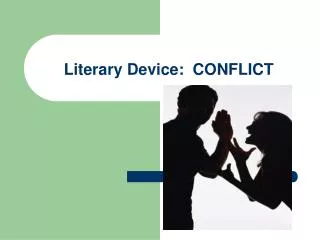
External Conflict: Person vs. Person • Character stands in opposition of another character’s thoughts, feelings, or goals…
External Conflict: Person vs. Nature • Character struggles against the forces of nature.
External Conflict: Person vs. Society • Character must confront her own ideas and how they may stand in opposition of the surrounding society.