Chapter 19 Section 1
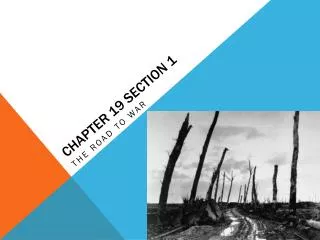
On June 28, 1914, Archduke Francis Ferdinand of Austria-Hungary was assassinated in Sarajevo, Bosnia, by Gavrilo Princip, a nationalist from Serbia. This event ignited tensions that led to the outbreak of World War I, driven by imperialism, militarism, and nationalism as well as a complex web of alliances among European powers. Germany and Austria-Hungary formed the Central Powers, while France, Russia, and Great Britain aligned as the Allies. The war, marked by stagnation and trench warfare, took a toll on nations and reshaped the world order.

Chapter 19 Section 1
E N D
Presentation Transcript
Chapter 19 Section 1 June 28, 1914- Archduke Francis Ferdinand- visited Sarajevo, Bosnia- part of the Austro-Hungarian Empire
Chapter 19 Section 1 continued • Gavrilo Princip- Bosnia part of Serbia • Assassinated Ferdinand • Start of The Great War- WWI- The War To End All Wars • Causes of WWI • Imperialism, militarism, nationalism, tangled system of alliances • European powers- colonization- Africa • Militarism- building up- nation’s armed forces-prepare for war • Nationalism- pride in one’s country • Mobilization- readying of troops for war • Germany and Austria-Hungary- linked by a treaty
Chapter 19 Section 1 continued • August 1, 1914- Germany declared war on Russia • Germany- first strike strategy- Schlieffen Plan- sweep through France- defeat the French- turn east and defeat Russia • Central Powers- Germany, Turkey, Bulgaria, Austria-Hungary • Allies- France, Serbia, Russia, and Great Britain • By 1915- Italy joined the Allies • Stalemate- situation- neither side- advantage
Chapter 19 Section 1 continued • Americans oppose the Central Powers • Kaiser Wilhelm II- Kaiser of Germany- US did not trust him • Propaganda- information intended to sway public opinion