Download
1 / 14
140 likes | 240 Views
Explore the transformative restoration of Lake Apopka over decades, showcasing reduced phosphorus levels, improved water quality, abundant wildlife, and the reversal of eutrophication. Discover the success of habitat restoration efforts, increased game fish populations, and enhanced biodiversity in the area, presented at the Seminole Audubon Society program in 2012 by David Walker, the Lake Apopka Basin Program Manager. Witness the impact of time on the recovery and rejuvenation of this ecosystem, from harvesting results to the documented bird species and rarities observed. Learn about the ongoing efforts and land management plan driving the continual restoration progress for future generations to cherish.

E N D
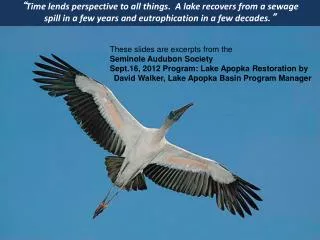
“Time lends perspective to all things. A lake recovers from a sewage spill in a few years and eutrophication in a few decades.” These slides are excerpts from the Seminole Audubon Society Sept.16, 2012 Program: Lake Apopka Restoration by David Walker, Lake Apopka Basin Program Manager
Reduce Phosphorus Loading Lower Phosphorus Concentrations Lower Levels of Algae Time Greater Water Transparency Submersed Aquatic Vegetation (Habitat) Increased Game Fish Populations Reversing Eutrophication
Restoration of Lake ApopkaSeminole County Audubon SocietySt. Johns River Water Management DistrictSeptember 16, 2012
Harvesting Results for 1993-2011 Lake Apopka 19,500,000 lbs
363 species of birds documented to date, just three short of the 366 species found at Everglades National Park
High Daily Counts1,660 BB Whistling Ducks76 L. Bitterns1,560 S.T. Kites305 N. Harriers523 K. Rails1,890 L.B. Dowitchers211 M. Wrens
RaritiesPacific LoonRed-necked GrebeRough-legged HawkSooty TernHudsonian GodwitGolden EagleFork-tailed Flycatcher