Download
1 / 14
140 likes | 239 Views
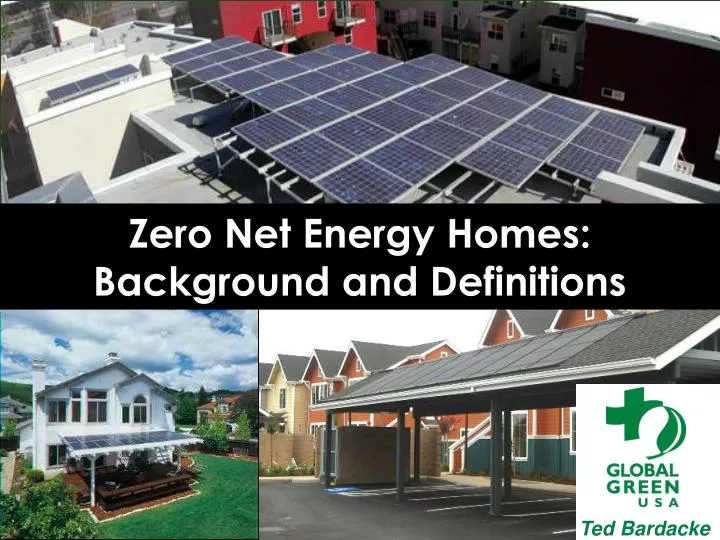
Zero Net Energy Homes: Background and Definitions. Ted Bardacke. Nueva Vista, Santa Cruz. Colorado Court, Santa Monica. Policy/Regulatory Landscape. AB 32 - Buildings are high priority and seen as high opportunity Title-24 Energy Code - 15% more stringent every 3 years

E N D
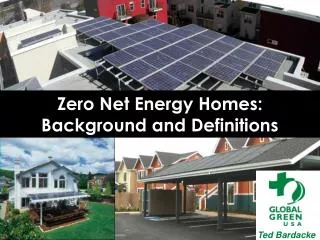
Zero Net Energy Homes: Background and Definitions Ted Bardacke Nueva Vista, Santa Cruz Colorado Court, Santa Monica
Policy/Regulatory Landscape • AB 32 - Buildings are high priority and seen as high opportunity • Title-24 Energy Code - 15% more stringent every 3 years • California Energy Commission - Recommended 2020 goal • Public Utilities Commission - First goal of long-term strategic plan for 2020
What Zero Energy is Not? • Not Off the Grid - Utilizes net metering • Not Fossil Fuel-Free - Still might have natural gas or “dirty” electricity • Not Carbon Neutral - emissions still dramatically reduced
What is a Zero Net Energy Home? Greatly reduced needs for energy through efficiency gains, with the balance of energy needs supplied by renewable technologies.
What is “Cost Effective?” • Net cash positive from day one when first costs for energy efficiency and renewables are folded into mortgage. • Annual utility bill savings are greater than the additional monthly mortgage payment needed to pay for energy efficiency and renewable components
Cost Effective? ($22k) With Tax Benefit Without Tax Benefit
Cost Effective? ($32k) With Tax Benefit Without Tax Benefit
Affordability • Affordable/subsidized mortgage products will need to adapt to look at true “housing burden” including utilities • Affordable rental housing business model, utilizing low income housing tax credits, exists and is being utilized.
3 : 1 Density 1 : 1 2 : 1
Density • Near-site option -- adjacent, contiguous, or within a limited radius • Working on additional mechanisms to ensure that policy does not induce sprawl • Want to recognize environmental, GHG, and livability benefits of compact development
Financial Models • Single Family = Incorporate into Mortgage • Reduced utility bills more than offset increased mortgage costs • Condos = Power Purchase Agreements • HOA turns into a power-purchase co-op • Affordable Housing/REITs = Incorporate into Deal • Developer buys/owns system and gets payback