Defect Remediation Project
50 likes | 162 Views
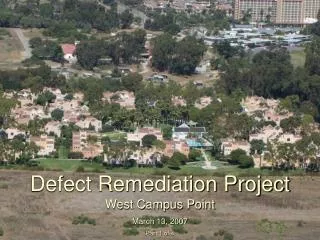
West Campus Point, built in 1986, comprises 65 units offering affordable housing for faculty and successfully aids in recruiting and retaining 71 ladder faculty members. Managed by the WCP Homeowners Association, which elects a Board of Directors annually, the community focuses on long-term financial planning and compliance with California homeowners association laws. Regular maintenance, budgeting, and infrastructure assessments are conducted to ensure sustainability, with professional reserve studies performed every 2-3 years. This report outlines ongoing issues and the necessity for leak remediation efforts.


Defect Remediation Project
E N D
Presentation Transcript
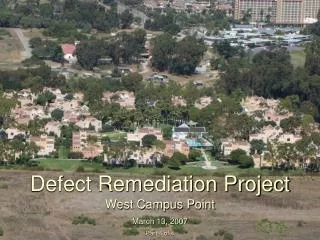
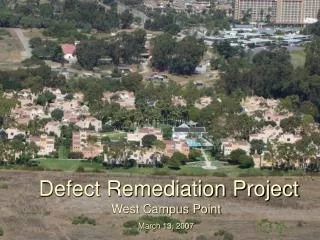
Defect Remediation Project West Campus Point March 13, 2007 Part 1 of 4
What Is West Campus Point? • 65 units • Built in 1986 • Affordable housing for faculty • 71 ladder faculty members (9% of total) • Very successful in recruiting and retaining faculty • Managed by WCP Homeowners Association
WCP Homeowners Association • Governed by Board of Directors elected annually • Members usually serve 2 – 3 years • Manages property with assistance from Town 'N Country Property Management • Monthly financial reports and Board meetings • Regular maintenance “walk-arounds”
WCP Long-term Financial Planning • Comply with California law governing homeowners associations • Annual budgeting and auditing for both short-term and long-term maintenance • Long-term cost estimates derived from professional “reserve studies” • every 2 – 3 years • Analyze common infrastructure lifetime maintenance and replacement costs • Fully fund recommendations • Some issues have transcended scope of any HOA
Leak Remediation Efforts (End of Part 1)