ADOLESCENCE
This overview explores adolescence, a crucial developmental stage from ages 12 to 20, marked by significant physical, psychological, and emotional changes. It highlights gender differences in puberty, including hormonal influences and physical changes such as growth and sexual development in males and females. Key psychological aspects, including the search for identity, peer pressure, and increased risk of issues like substance abuse, eating disorders, and emotional distress, are discussed. Understanding these elements is essential for supporting adolescents through this transformative period.


ADOLESCENCE
E N D
Presentation Transcript
ADOLESCENCE GROUP 3 Nick Quinn, Jay Rodriquez, Kyle Kulp, Phillip Hosking
PUBERTY • Ages 12-20 • Gender differences develop • Problems with finding identity and peer pressure: • Substance Abuse • Eating Disorders • Suicides and attempts
Physical Changes • Body becomes capable of reproduction • Caused by hormone signals from the pituitary gland (in brain) to the gonads. • Before puberty, the only bodily difference between genders is genitals. • During puberty, body size, shape, and composition changes.
Gender Development (MALE) • In males, the puberty causing hormone is an androgen. • Pubic hair, facial hair, Voice becomes deeper, body odor, skin changes, acne • Males take longer to go through puberty than females
Gender Development (FEMALE) • In females, the puberty causing hormone is an estrogen • Menstruation and fertility occurs. • Body shape changes • Wider hips and bigger breasts
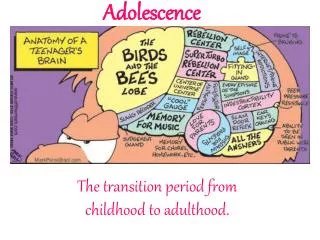
Adolescent Psychology • Cognitive, Emotional, and Attitude changes • Peer group becomes more important than parents • Thoughts become more abstract, confused between right and wrong • Try to find their own identity • Thoughts and ideas become important in shaping the adolescents future life.
Sexuality • Sexual desire begins with the onset of puberty • Sexual orientation varies greatly (confusion) • Risks of adolescent sexual activity include emotional stress and STDs