DNA Replication
DNA replication is a crucial biological process where the genetic code is copied for cell division. It begins with the unpacking and unzipping of chromosomes, allowing access to the DNA strands. The process involves base pairing at the replication fork, where one strand becomes the leading strand, growing towards the fork, while the lagging strand grows away. Specialized enzymes such as helicase, DNA polymerase, and ligase play key roles, alongside single-stranded binding proteins. The result is the formation of sister chromatids, identical copies essential for cell division.

DNA Replication
E N D
Presentation Transcript
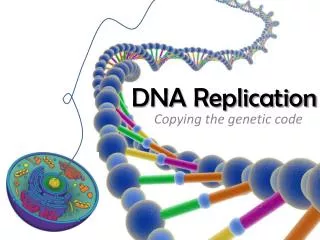
DNA Replication Copying the genetic code
DNA Replication • Unpack the Chromosomes • Unzip the DNA • Base pairing at the replication fork • Leading strand vs Lagging strand Copying the genetic code
copied during cell division copy Sister Chromatids(identical copies)
Accessing the DNA DNA in use inactive DNA (deactivated or mitotic)
Replication Bubbles 3’ 5’ 3’ 5’ helicase
Replication Bubbles 3’ 5’ 3’ 5’
Replication Bubbles 3’ 5’ 3’ 5’
Replication Bubbles Replication Fork 3’ 5’ copies 3’ 5’ Replication Fork
Releasing the Tension • Topoisomerase cleaves and uncoils DNA ahead of helicase • Single-stranded DNA binding proteins (SSB) prevent DNA from coiling back up
DNA Replication Primase DNA Polymerase III 3’ 5’ RNA primer 3’ 5’
DNA Replication • The leading strands grow toward the replication fork 3’ 5’ Leading Strands 3’ 5’
DNA Replication 3’ 5’ 3’ 5’
DNA Replication • The lagging strands grow away from the replication fork 3’ 5’ Lagging Strands 3’ 5’
DNA Replication DNA Polymerase I DNA Ligase 3’ 5’ 3’ 5’
DNA Repliaction 3’ 5’ 3’ 5’
DNA Repliaction 3’ 5’ Okazaki Fragments 3’ 5’