Exploring Traditional and Alternative Energy Sources: Advantages and Disadvantages
This article delves into various energy sources, both traditional and alternative. Traditional energy resources include wood fuel and fossil fuels formed over millions of years from organic matter. Alternative energy options discussed include solar, hydroelectric, geothermal, wind, nuclear, and biomass energy. Each source is evaluated on its advantages, such as sustainability and pollution reduction, as well as its disadvantages, including costs and environmental impacts. Understanding these sources helps in making informed energy choices and promotes efficient energy usage.

Exploring Traditional and Alternative Energy Sources: Advantages and Disadvantages
E N D
Presentation Transcript
EnergyResources Earth Sci Ch. 26 The Amazing Mr. Batts
Traditional sources of Energy • Wood-fuel for heating and cooking • Field crops and fecal material are also burned.
Fossil Fuels • Energy sources that formed over geologic time (millions of years) • From decomposition and compression of organic matter • Ex= coal, oil, natural gas, petroleum
How oil forms • Ocean Odyssey - Oil [www.keepvid.com].mp4
Hydroelectic Power - How it Works [www.keepvid.com].mp4 • Geothermal Energy Process [www.keepvid.com].mp4
Solar • Advantages: • Will last forever • Free • No pollution • Disadvantages: • Can’t use at night, unless use batteries • Solar panels and installation are expensive
Hydroelectric power • Advantages: • Neverending supply • Nonpolluting • Disadvantages: • Must be located near a river • Can flood large areas • Alters ecosystems
Geothermal Energy • Advantages: • Abundant and reliable • Disadvantages: • When tapped, cooler water takes its place • Has minerals that can clog pipes
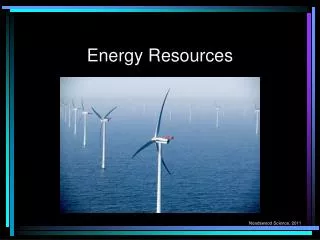
Wind Energy • Advantages: • Unlimited energy source • Wind farms can be built quickly • Nonpolluting, don’t need water • Disadvantages: • Not steady winds in all areas • Not attractive
Nuclear Energy • Advantages: • Don’t produce CO2 (clean energy) • Little Uranium makes lots of energy • Disadvantages: • Risk of nuclear accident • High costs to built and operate
Japan videos • YouTube - Caught on Tape: Tsunami hits Japan port town • YouTube - Scary footage: Tsunami waves raging, buildings burn after 8.9 Japan earthquake
Biomass • Advantages: • Usually easy to find • Can use trees, grass, animal wastes • Disadvantages: • Produces CO2 and particulates (smoke, ash)
How can we use energy more efficiently? • (student response) • Cars, at home, at school, electricity, appliances, carpooling, insulation,
Human impacts • Ozone hole- CFCs • Global warming • Acid rain (pH less than 5.0; sulfur dioxides and nitrogen oxides
Water Usage in the US • 41% Agriculture • 38% Power plant cooling • 11% Industry • 10% Public
References • http://www.blogcdn.com/www.autoblog.com/media/2006/03/Cow-Dung-resized.jpg • http://www.pewclimate.org/docUploads/images/burning%20wood.jpg • http://c2431622.cdn.cloudfiles.rackspacecloud.com/wp-content/uploads/2008/09/sun_cme.jpg • http://jonathanhaynes.com/windmill2.jpg • http://www.youtube.com/watch?v=0kHRbns-8so • http://www.youtube.com/watch?v=cEL7yc8R42k • http://www.youtube.com/watch?v=rfUQy86ZMpQ • http://worldclimateissues.files.wordpress.com/2010/01/solar-panels-roof1.jpg • http://kivafellows.files.wordpress.com/2009/11/paute1.jpg