neural communication
This overview delves into the intricate processes of neural communication, focusing on the dual aspects of electrical (graded potentials, action potentials) and chemical signaling (neurotransmitter effects). It explores how exocytosis and vesicular interactions lead to EPSPs (excitatory post-synaptic potentials) and IPSPs (inhibitory post-synaptic potentials). The role of voltage-gated and ligand-gated channels in creating and modulating these electrical events is examined, alongside insights into neurotransmitter types such as glutamate and GABA. Understanding these dynamics is crucial for grasping how neurons communicate and influence behavior.

neural communication
E N D
Presentation Transcript
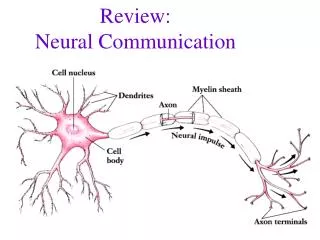
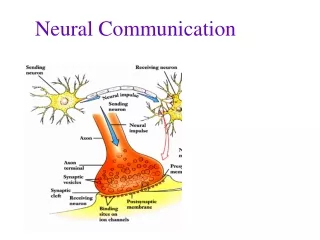
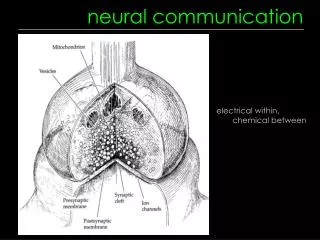
neural communication electrical within, chemical between
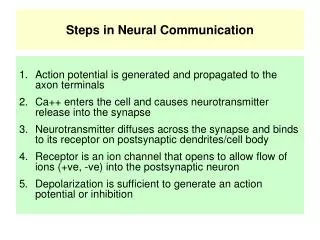
the big picture ACTION POTENTIAL (voltage-gated channels) GRADED POTENTIALS EPSP/IPSP (ligand-gated channels)
graded potentials & membrane sodium (Na+) potassium (K+) chloride (Cl-) channels on dendrites
EPSP & IPSP sodium (Na+) potassium (K+) chloride (Cl-) So, how are EPSPs and IPSPs created?
ELECTRICAL EVENT #1 LEADS TO ELECTRICAL EVENT #2 CHEMICAL EVENT LEADS TO ELECTRICAL EVENT #1 (EPSPS & IPSPS cause AP) (Neurotransmitters cause EPSPs & IPSPs) voltage-gated channels ligand-gated channels
creating EPSP/IPSP Neurotransmitters cause EPSPs & IPSPs. EPSP IPSP
receptors & channels voltage-gated action potential & neurotransmitter release ligand-gated graded potentials
neurotransmitters glutamate (+) vs GABA (-) acetylcholine (Ach) serotonin (5-HT) dopamine (DA) epinephrine (E) & norepinephrine (NE) about receptor subtypes…
inactivating NTs • reuptake • enzymatic breakdown • diffusion
ligand-gated channels effects after binding IONOTROPIC - fast METABOTROPIC - cascade of events requiring energy - alters structure of the cell - turn on/off genes