Understanding Ionic and Covalent Bonding: Key Differences and Properties
This article explores the fundamental differences between ionic and covalent bonding, highlighting their characteristics and behaviors. Ionic bonds are non-directional, exhibit equal strength in all directions, and can conduct electricity when molten or in solution, while covalent bonds involve the sharing of electrons and are directional, with varying strengths. We also discuss the properties of ionic and covalent compounds, including melting and boiling points, solubility in water, and electrical conductivity. Key examples include hydrogen fluoride, ammonia, and carbon dioxide.

Understanding Ionic and Covalent Bonding: Key Differences and Properties
E N D
Presentation Transcript
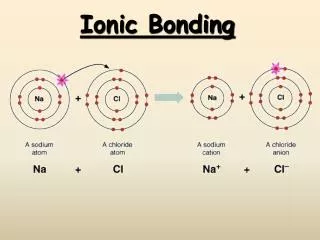
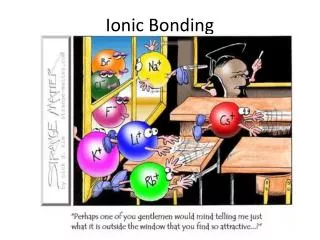
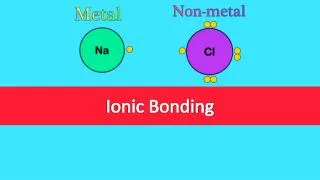
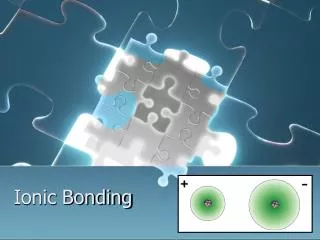
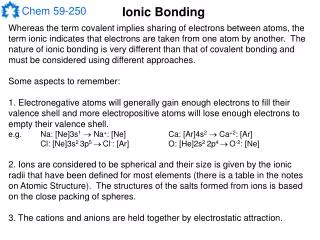
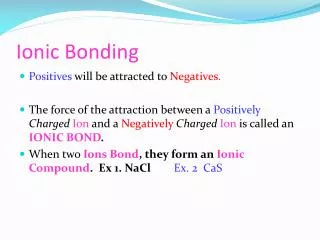
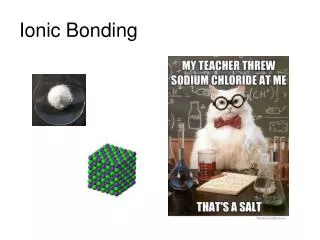
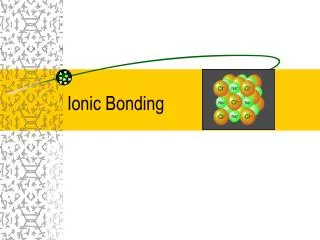
Ionic bonding Non directional bond- strength of bond equal in all directions Conducts electricity when MOLTEN or in SOLUTION(aq) High melting point and boiling point hard solids
Covalent bonding The sharing of electrons
Covalent bonding is directional. The strength of the bond is in one direction Covalent structures are low melting point solid, liquids and gases They tend not to be soluble in water and have poor electrical conductivity
The outer shell of hydrogen can only contain a max of two electrons (1s orbital) The electrons are equally shared between the hydrogen's
Hydrogen fluoride ammonia
Number of electrons in the outer shell Element Bonds 1 2 2 3 4 3 1 6 6 5 4 5 H O S N C P