Understanding Pain Management: Types, Causes, and Treatment Approaches
Pain is a vital health concern, often under-treated, that can severely impact daily living. It can be categorized as acute or chronic and stems from various physiological causes including cutaneous, somatic, and visceral stimuli. Effective pain management involves individualizing treatment plans through pharmacologic interventions such as non-opioids, opioids, and adjuvants, as well as non-pharmacologic techniques like relaxation, acupuncture, and biofeedback. Continuous assessment and intervention are crucial for optimal pain relief and maintaining functionality in patients.
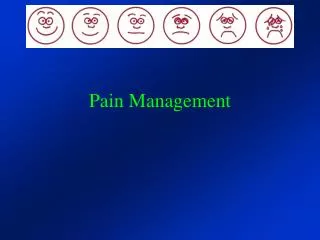

Understanding Pain Management: Types, Causes, and Treatment Approaches
E N D
Presentation Transcript
What is pain? • One of the most common reasons people seek healthcare • One of the most widely under-treated health problems
Pathophysiology • A sensation caused by some type of noxious stimulation • A pattern of responses that function to protect the individual from harm • Whatever the experiencing person says it is whenever he says it does
Components of Pain • Physical • Caused by some kind of noxious stimulant • Emotional • Results of combination of thoughts, feelings, and beliefs • Behavioral • Pattern of responses that function to protect the individual from further harm
Causes of Pain • Cutaneous • Direct stimulation to skin (cut) • Somatic • From musculo-skeletal system (sprained muscle) • Visceral • Arising from hollow organs (appendicitis)
Neuropathic • Damage to nervous system • Referred • Pain arising from someplace else in body
Descriptions of pain • Chronic: occurring over a long period of time • Acute: sudden, brief onset
Visual Analog Scale This is a line 10 cm. long (about 4 inches) that is divided into ten divisions. Patients are asked to show the amount of pain on a 1-10 scale. Researchers say that patients cannot function with a scale with more than ten points.
PQRST This mnemonic is devised to show the steps in pain assessment: • Provoking factors • Quality • Region/Radiation • Severity/Symptoms • Timing
Provoking factors include what caused the pain and what might be making it worse • Quality questions refer to how the pain feels…let the patient tell but offer suggestions if necessary, like sharp, dull, throbbing, burning, etc.
Region….have patient point to area that hurts • Severity can be measured with the pain rating scales • Symptoms may accompany the pain….nausea, vomiting, etc • Timing refers to when the pain started, how long it lasts
Be aware • Just because a patient cannot respond to pain doesn’t mean there is no pain • Activities of daily living (ADLs) may be effected • Neurological status will alter the response to pain
Pain Management Management must be timely, individualized, and bring the pain to an acceptable level of tolerance
Pharmacologic interventions Must be individualized • Three main categories: • Non-opioids • Opioids • Adjuvants
Non-opioids: • Acetominophen (Tylenol) • Aspirin • NSAIDs (Advil) • Opioids • Weak Strong • Codeine Hydromorhone • Oxycodone Morphine • Vicodin Merperidine • Adjuvants • Primary function is not pain relief but provide relief • May modify mood so patient feels better
Precautions to giving pain medications • Medication choice may depend on practitioner’s preference, however: • Should not give two analgesics from same class at same time • Must be aware of effects of medications • Must watch for allergic reactions
Routes of medication administration • Oral • Injection • Intravenous (includes PCA) • Epidural • Rectal • Topical
WHO Pain Ladder SEVERE PAIN: Keep giving mild pain medication and add a strong opioid such as morphine or Fentanyl MODERATE PAIN: Keep giving mild pain medication and add a mild Opioid such as codeine MILD PAIN: Aspirin, ibuprophen Acetominophen, naprosyn
Concepts of WHO Pain Ladder • By the mouth • By the clock • By the ladder • For the individual • With attention to detail
Placebos Controversial use of an inactive substance to satisfy the demand for medication
Non-pharmacologic interventions Pain control without using medications • Alter the environment • Relaxation and guided imagery • Meditation • Cutaneous stimulation • Massage, acupressure, acupuncture, TENS • Biofeedback • Therapeutic touch • Education
JCAHO Standards for Pain Management • Address care at the end of life • Assess and manage pain appropriately • Assess pain in all patients • Support safe medication ordering and administration
Monitor patient during post-procedure period • Rehabilitate for optimal level of function • Educate about pain an managing pain • Plan for discharge continued care if needed • Collect data to monitor performance
Nurses spend more time with patients than any other provider. They must stay informed in order to give the best care to their patients.
References: • Falk. Kim Marie. Pain Management. National Center of Continuing Education. Catalog 98 TX. • http://www.fxbcenter.org/caring/painladder.html • http://www.harcourthealth.com/Mosby/Wong/fyi_03.html