Download
1 / 4
40 likes | 161 Views
Chloroplasts are green structures in plant cells that capture sunlight energy, enabling photosynthesis. These organelles contain chlorophyll, the green pigment essential for absorbing light. To observe chloroplasts, use thin leaves like those of Elodea or moss and examine them under a microscope. Staining potato tissues with iodine highlights starch grains, which are carbohydrates stored by the plant. Despite some plant parts lacking chloroplasts, such as potato tubers, they still store energy in the form of starch, demonstrating the importance of chloroplasts in plant energy storage.

E N D
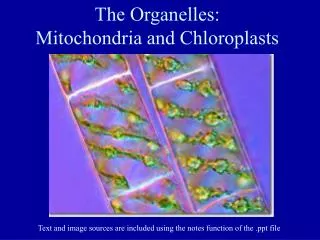
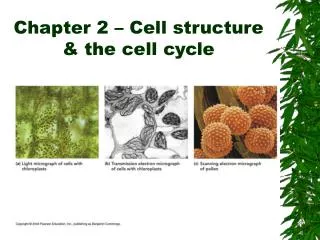
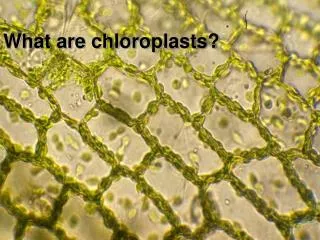
Chloroplasts are small green ‘bodies’ in some plant cells which enable the plant to ‘capture’ sunlight energy. • Select a plant which has a very thin leaf such as Elodea or simple moss leaves. • Place a single leaf on a microscope slide, add a drop of water and a cover slip. • Look at the leaf down a microscope and see if you can identify the small green chloroplasts. • If you have difficulty seeing the chloroplasts, look at the cells at the edge where the leaf is very thin.
The chloroplast is filled with a green pigment called chlorophyll. If you imagine an oblong shaped boiled sweet with a filling…. the sweet is like the chloroplast and the filling is the chloro“phyll” Chloroplasts absorb light energy and enable the plant to use this to build carbohydrates such as starch. In many high power images of chloroplasts we can see the starch grains: Starch grains
Take a small section of potato tissue and stain it with iodine solution. Examine it under the microscope. The plant is able to export carbohydrates to other parts of the plant where starch grains build up. For example a potato tuber stores starch grains – so although it has no chloroplasts to make carbohydrates – they are packaged up and stored there.