Download

1 / 0
Understanding Progressivism: Reform Movements and Teddy Roosevelt's Impact
0 likes | 120 Views
The Progressive Era, a crucial period in the early 20th century, marked a wave of reform movements in American politics and industry. Driven by the desire for social justice, economic fairness, and governmental accountability, Progressivism sought to address the challenges posed by industrialization and urbanization. Theodore Roosevelt, as President, played a pivotal role in advancing these reforms, advocating for policies that aimed to regulate corporations and promote public welfare. This chapter explores the essence of Progressivism and Roosevelt's enduring legacy.

Download Presentation 
Understanding Progressivism: Reform Movements and Teddy Roosevelt's Impact
An Image/Link below is provided (as is) to download presentation
Download Policy: Content on the Website is provided to you AS IS for your information and personal use and may not be sold / licensed / shared on other websites without getting consent from its author.
Content is provided to you AS IS for your information and personal use only.
Download presentation by click this link.
While downloading, if for some reason you are not able to download a presentation, the publisher may have deleted the file from their server.
During download, if you can't get a presentation, the file might be deleted by the publisher.
E N D
Presentation Transcript
-
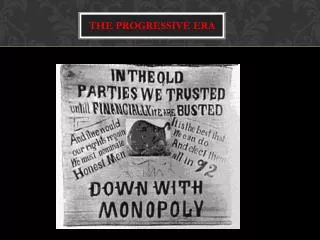
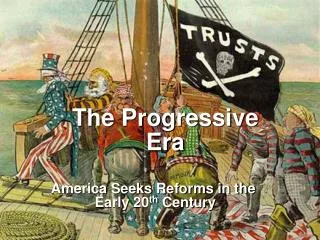
The Progressive Era
Chapter 20 -
Teddy Roosevelt
Chapter 20.1 - Query What exactly is Progressivism? Answer: Period of reform movements in American politics and industry at the beginning of the 20th century Why? Politicians and businessmen
- Theodore Roosevelt as President How did TR become President? Answer: McKinley assassinated in Buffalo Leon Czogolsz Anarchist (against government) Irony – U.S. gets a strong, inspired leader Who was he as a person? Goal = use “bully pulpit” of office to do “good”
- Jigsaw Activity 1. Four groups 2. Each group – discuss one topic 3. Fill out worksheet 4. Rotate to next group
- Discussion What actions did TR take to ensure a “square deal?” 1. Actively tried to break up trusts 2. Battled to help labor 3. Strengthened government regulatory agencies 4. Preferred environment over industry
- Good Trust or Bad Trust? GOOD TRUSTS beat rivals thru: Lower prices Better products Greater efficiency Engage in: Regulated activity BAD TRUSTS Beat rivals thru: Unfair pricing Playing dirty Engage in: Price gouging
- Read…and Discuss
-
Middle-Class Reformers
Chapter 20.2 - Discussion Progressives believed that the government should act like a guardian, not an umpire. Support this statement.
- Review What four ways did TR act like a government guardian? 1. Actively tried to break up trusts 2. Battled to help labor 3. Strengthened government regulatory agencies 4. Preferred environment over industry
- TR Inspires… TR’s efforts = 1. Re-election – in a landslide 2. Inspiration – to others to act Target = corrupt politicians and big corporations… On local and state levels
- Jigsaw Activity 1. Groups of three 2. Each member – researches one topic 3. Fill out worksheet 4. Group exchange of information
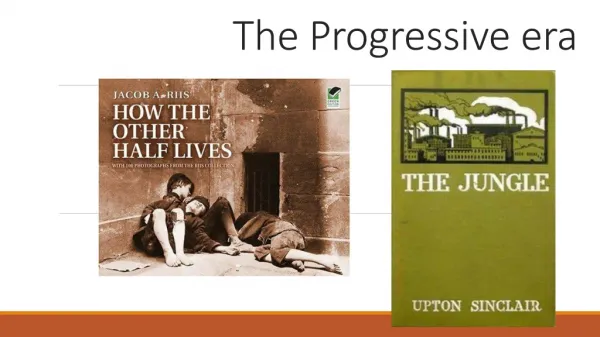
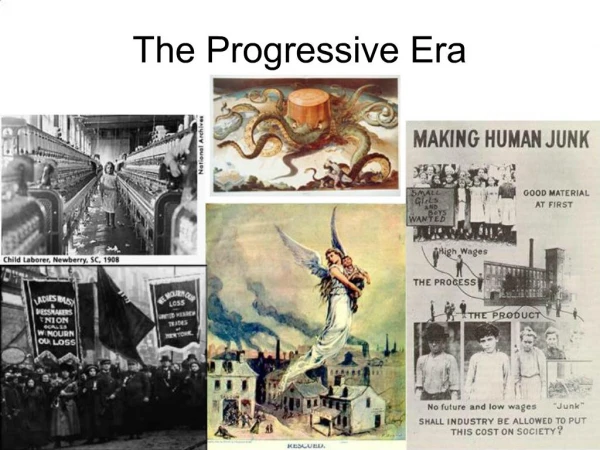
- Muckrakers! What - Journalists, novelists, activists who investigate Upton Sinclair = meatpacking Ida Tarbell = Standard Oil Lincoln Steffens = city corruption Goal – expose corruption in government, business, labor Publish the results Fast press + cheap paper = BAD PUBLICITY + CHANGES
- Resulting Laws Meat Inspection Act – federal government can inspect meat across state lines for health, sanitation Pure Food and Drug Act – sale of impure items is illegal, medicines must list contents Harrison Narcotic Act – sale of some drugs illegal without prescription
- Discussion Are there modern day muckrakers today?
-
William H. Taft
Chapter 20.3 - Taft in the White House (HW #1) TR = no third term… …and handpicks William Taft 1. Describe Taft’s background. 2. What was Taft’s view on reform? DISAPPOINTMENT to Progressives: 1. The Payne-Aldrich Tariff 2. Alaska land sales What happened in each one?
- The Insurgent Revolt (HW #2) Accusation – Taft is an agent of business Decision – Progressive “insurgents” will act Who are they? What Progressive actions did they take? 1. Joseph G. Cannon – removed as House Rules Chairman 2. ICC – extends powers over telephone and telegraph (Mann-Elkins Act)
- The Return of TR TR returns from Africa Annoyed with Taft Praises insurgent actions Public speaking tour = more reforms necessary New Nationalism 1. Strong govt. regulation of large corporations 2. Strong social programs 3. Collectivism – focus on group benefits over individual gain
- Political Impact Republican support is split Democratic victories in 1910 elections (Wilson = NJ) Insurgents– urge TR to run for President again Republican Convention – loyalists to Taft win out Insurgents walk out, form new party… Bull Moose Party
- Split Ticket Republicans Democrats LaFollette Taft Roosevelt Wilson
- Election of 1912-Wilson v. Roosevelt (HW #3) Taft = out (no public support) Battle of ideas: TR = New Nationalism Strong, activist government Strong social programs Collectivism WW = New Freedom Govt. oversight, let courts decide Individualism should prevail Collectivism = danger to growth Result = Wilson wins*
- Election of 1912
- Popular Vote - 1912
-
Woodrow Wilson
Chapter 20.4 - Woodrow Wilson (HW #1) Describe Woodrow Wilson. How did he differ from TR? Focus of Presidency = reform Three areas: 1. Tariff Reform 2. Banking Reform 3. Regulating Business
- Jigsaw Activity 1. Groups of three 2. Each member – researches one topic 3. Fill out worksheet 4. Group exchange of information
- Tariff Reform (HW #2) State of the Union address only topic discussed Why are tariffs bad?* Oscar Underwood Reduce Payne-Aldrich Senate disapproval Senators exposed! Bill passes
- Banking Reform (HW#3) Old system = too volatile, bank runs, panic little banks bigger banks New York banks speculators New system = Federal Reserve Banks, issue money when needed Federal Reserve Bank little banks bigger banks big city banks
- Regulating Business Sherman Antitrust Act = not enough Clayton Antitrust Act Federal Trade Commission Louis Brandeis
-
Progressive Foreign Policy
Chapter 20.5 - Theodore Roosevelt Irony Limit power of big business Give power to nation/self Big Stick Diplomacy = Negotiate peacefully… …Simultaneously threaten Navy example
- Challenge - Far East Manchuria Open Door Policy Russia Japan China New Hampshire Korea U.S. Pacific Colonies
- Challenge - Panama Canal U.S. interests Panama Colombia France Revolution U.S. involvement Canal Zone William Gorgas Yellow Fever $25 Million
- Roosevelt Corollary Review - Monroe Doctrine Worry – region around CZ Corollary – U.S. has right to intervene in any Western nation that is politically or financially vulnerable to European control Dominican Republic Cuba – under Taft Haiti – under Wilson Nicaragua – under Taft Mexico – under Wilson
- William H. Taft Diplomacy = U.S. ability to make (and protect) money Dollar Diplomacy: 1. Convince Americans to invest in business in Latin America 2. Protect investors’ interests… 3. …By invading Nicaragua example
- Woodrow Wilson Think-Pair-Share 1. How did the Roosevelt Corollary affect U.S. involvement in Mexico? Answer: Tampico, Veracruz, and Pancho Villa incidents 2. What prevented a war from occurring between the U.S. and Mexico? Answer: Conflict in Europe causes Wilson to withdraw troops

More Related