Understanding Steamer Projections: Enhancing Baseball Forecasting Through Statistical Analysis
Steamer projections provide crucial insights for forecasting player performance in baseball, equating current ability with statistical ability and luck. This system utilizes historical data by weighing recent statistics more heavily and regressing towards the mean. Unlike many projection systems, Steamer employs distinct regression methods for various player components, adjusting for league and minor league stats. Further advancements are needed in measuring player "stuff" and developing similarity scores for better forecasts. This approach promises to refine the way we understand and predict player performance.

Understanding Steamer Projections: Enhancing Baseball Forecasting Through Statistical Analysis
E N D
Presentation Transcript
The Basics of Projection Systems Forecasting the upcoming season is essentially the same as determining current ability. Most projection systems are modifications on the same simple system (Marcel “the monkey): • Weighs stats from more recent seasons more heavily • Regress to the mean Why regress to the mean? Results = Ability + Luck
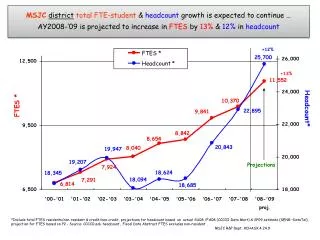
Two Examples of Marcel in Action 23.0% 18.3%
Steamer Along with most “fancier” systems: • Uses adjusted minor league statistics in addition to MLB stats. • Adjusts for home ballparks, league, starting v. relieving What makes Steamer distinct: • We use a different system for each component (K%, BB%, HR%…) • We regress to a different “prior” for each player
Projecting Joaquin Benoit’s K% in 2011:4 possible forecasts 26.1% 23.7% 28.0% 24.9% Actual K%: 26.1%
Regression is Bayes Likelihood of player statistics Given different levels of talent Projection Distribution of MLB talent
Matt Thornton 2012 27.2% 24.0%
Where to go from here? For Pitchers: • Develop a better measure of stuff than fastball velcoity • Jeremy Greenhouse: StuffRV based on velocity and movement • Josh Kalk/Brooksbaseball: Similarity Scores based on pitchf/x For Hitters: • Can something similar be done with hitf/x? Trackman? • Speed off the bat • Trajectory