Understanding the Structure of Atoms: The Building Blocks of Matter
Dive into the fascinating world of atomic structures in this chapter. Atoms, the essential components of matter, are studied through various scientific approaches. Discover key figures in atomic theory, such as Democritus, Rutherford, and Bohr, who have shaped our understanding over the centuries. Learn about the different parts of an atom: protons, neutrons, and electrons, their charges, masses, and their roles within the nucleus and beyond. Explore models that illustrate atomic structures, including the Bohr and Schrödinger models.

Understanding the Structure of Atoms: The Building Blocks of Matter
E N D
Presentation Transcript
Structure of the Atom Chapter 10 Pages 240 - 254
How are atoms studied? • Atoms are the building blocks of matter • Atoms are too small in size to study easily • Size of Earth : soda can = soda can : atom
Who studied the atom? • Studied by many scientists for centuries • Democritus (400 BC) – phrase “atomos” • Rutherford (1911) – nucleus (gold foil expt) • Moseley (1913) – X-rays to find atomic # • *Bohr (1913) – planetary model of the atom • *Schrödinger (1923) – electron cloud model
N P e I’m an electron! I’m a proton! I’m a neutron!
P N e I was walking along and I saw these two. I was telling jokes to the neutron. The proton and I were having fun.
P P P P N N N N e e e e They looked so happy there together. I was p o s i t i v e l y charged! I couldn’t have amassed more happiness.
P N e e e e e e e e e e e e e e e e e e e e e e e e e e e e e e e e The proton looked happy, so I wandered closer. I could see the electron coming near. The who? Huh?
P N e They were HUGE next to me! The electron was so cute! Like a speck of dust, or something…
P N e e e e e e e e e e e e e e e e e e e e e e e e I didn’t want to seem obvious, so I kept walking. Around and around the electron goes. Hey electron, you’re making the proton dizzy.
P P P P P P P N N N N N N N e The proton seems so happy with the neutron. I’m having fun, but I still notice the electron. It won’t bother me if the electron hangs around.
P N e e e e e e e e e e e e e e e e e e e e I guess I’ll just wander around out here. I’m happy hanging out here. The center is cool, but sometimes it can be a “Bohr”.
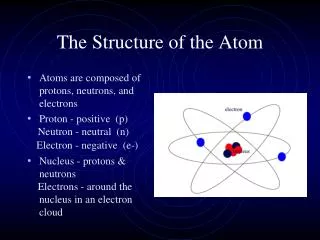
P N e e e e e e e e e e e e e e e e e e e e e e e e e e e e e e e e Electrons circle around the nucleus of an atom. Protons are a main part of the nucleus of an atom. Neutrons also hang out in the nucleus of an atom.
P N e e e e e e e e e e e e e e e e e e e e e e e e e e e e e e e e Electrons have a negative charge. Protons have a positive charge. + Neutrons have no charge. 0
P N e e e e e e e e e e e e e e e e e e e e e e e e e e e e e e e e Electrons are little and have a mass of almost zero. Protons are big and have a mass of one. Neutrons are also big and have a mass of one.
P N e e e e e e e e e e e e e e e e e e e e e e e e e e e e e e e e The Bohr Model
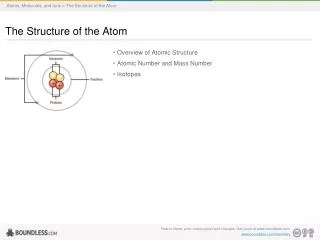
What is the structure of an atom? • Nucleus – center of the atom • Home of Protons and Neutrons • Proton • Has a positive (+) charge • Has a relative mass of 1 • Determines the atomic number • Found inside the nucleus P
What is the structure of an atom? • Neutron • Has no (0) charge • Has a relative mass of 1 • Determines the isotope • Isotopes are two of the same element with different masses • Found inside the nucleus N
What is the structure of an atom? • Electron • Has a negative (-) charge • Has a relative mass of 0 (zero) • Determines the ion • Found outside the nucleus • Bohr model – electrons are in specific energy levels • Electron cloud model – electrons are in a random cloud e
What is the structure of an atom? Bohr Model “Planetary Model” Schrödinger Model “Electron Cloud Model”
How are P, N, e- related? • # protons = atomic number • # electrons = # protons in a neutral atom • # protons + # neutrons = atomic mass
What is a chemical symbol? • Chemical symbol tells us what atom it is • Always a CAPITAL LETTER, sometimes followed by a lower case letter • Ex: Oxygen O Nitrogen N Sodium Na • *Cobalt – Co *Carbon Monoxide – CO • (Co is an element, CO is a compound)