Download

1 / 12
120 likes | 226 Views
West Africa, a region rich in cultural diversity, is renowned for its vibrant textile traditions, particularly Kente cloth, woven primarily by the Ashanti people. With its origins tracing back to ancient kingdoms, Kente symbolizes royal heritage and is reserved for significant occasions. The colors of Kente hold deep meanings, representing various attributes like spirituality, growth, and purity. The region's unique climate and culinary traditions further enrich its culture, showcasing a blend of religious influences and agricultural practices that have shaped the identity of West African communities.

E N D
West Africa occupies an area in excess of approximately one-fifth of Africa. Islam is the predominant historical religion of the West African interior and the far west coast of the continent; Christianity is the predominant religion in coastal regions of Nigeria, Ghana, and Cote D’Ivoire
West African cuisine is heavy with starch, light on meat and generous on fat. Cooks in West Africa often use root vegetables like yams, coco-yams, and cassava, as well as cereal grains, plantains, hot spices, rice, peanuts, black-eyed peas, okra, green peas, citrus fruits, and pineapples.
This is an extremely wet and humid area all year round with high temperatures all year round. The South has two main rainy seasons May to June and October. The North is still humid but has less rain with one wet period running from June to September. The humidity is reduced by a dry and dusty north easterly wind which blows from the Sahara.
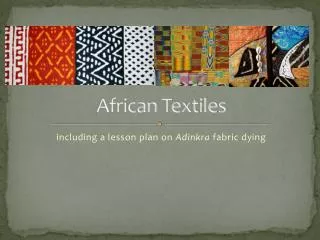
Kente Cloth is woven on a narrow, portable loom, in strips that are 3 to 5 inches wide and up to six feet long. There are names and meanings for every warp pattern and every weft pattern. Strip weaving has at least a thousand year history in Western Africa, and in many stories, it is the spider Anansi who teaches human beings to weave.
The "kente cloth" is of the Ashanti people. It is a royal and sacred cloth worn only in times of extreme importance. Kente was the cloth of kings. Over time, the use of Kente became more widespread, however its importance has remained and it is held in high esteem in the Akan family and the entire country of Ghana.
Symbolic meanings of the colors in Kente cloth: • black -- maturation, intensified spiritual energy you know • blue -- peacefulness, harmony and love • green -- vegetation, planting, harvesting, growth, spiritual renewal • gold -- royalty, wealth, high status, glory, spiritual purity • grey -- healing and cleansing rituals; associated with ash • maroon -- the color of mother earth; associated with healing • pink -- assoc. with the female essence of life; a mild, gentle aspect of red • purple -- assoc. with feminine aspects of life; usually worn by women • red -- political and spiritual moods; bloodshed; sacrificial rites • silver -- serenity, purity, joy; assoc. with the moon • white -- purification, sanctification rites and festive occasions • yellow -- preciousness, royalty, wealth, fertility
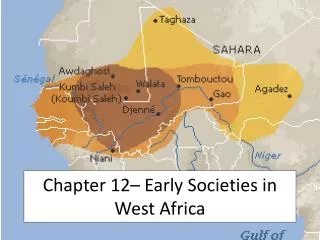
Historical accounts trace the origin of Kente weaving to early weaving traditions in ancient West African Kingdoms that flourished between 300 A.D. and 1600 A.D. Some historians maintain that Kente is an outgrowth of various weaving traditions that existed in West Africa prior to the formation of the Ashanti Kingdom in the 17th Century. Archaeological research has dated examples of narrow-strip cloths woven in West Africa as early as the 11th Century A.D. and perhaps earlier.