Exploring Cell Theory and Membrane Structure: Foundations of Life Sciences
Cell Theory, established in the 17th century, was significantly influenced by Robert Hooke's first observation of cork cells in 1665, alongside Antonie van Leeuwenhoek's discovery of living cells in 1674. This theory asserts that all living organisms comprise cells, which arise from pre-existing cells, as later supported by researchers like Schleiden, Schwann, and Virchow. The cell membrane, or plasma membrane, plays a crucial role in maintaining homeostasis, featuring a selectively permeable lipid bilayer. These foundational insights underpin our understanding of biology and cellular organization.

Exploring Cell Theory and Membrane Structure: Foundations of Life Sciences
E N D
Presentation Transcript
Theory and Membrane The Cell
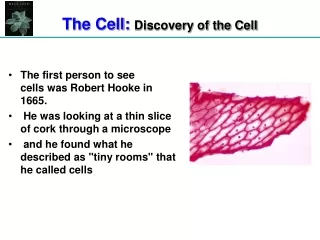
Cell Theory • First recorded view by Robert Hooke in 1665 • Cork structures look like monks' cells
Cell Theory • First recorded view by Robert Hooke in 1665 • Antonie van Leeuwenhoek viewed living cells in 1674 • Named moving objects in pond water animalcules (little animals)
Cell Theory • First recorded view by Robert Hooke in 1665 • Antonie van Leeuwenhoek viewed living cells in 1674 • Henri Dutrochet—1837 • “The cell is the fundamental element of organization.”
Cell Theory • First recorded view by Robert Hooke in 1665 • Antonie van Leeuwenhoek viewed living cells in 1674 • Henri Dutrochet—1837 • Matthias Schleiden—1837 • All plants are composed of cells that come from other plant cells
Cell Theory • First recorded view by Robert Hooke in 1665 • Antonie van Leeuwenhoek viewed living cells in 1674 • Henri Dutrochet—1837 • Matthias Schleiden—1837 • Theodor Schwann—1838 • Animals have cells and those come from other animal cells
Cell Theory • First recorded view by Robert Hooke in 1665 • Antonie van Leeuwenhoek viewed living cells in 1674 • Henri Dutrochet—1837 • Matthias Schleiden—1837 • Theodor Schwann—1838 • Rudolf Virchow—1858 • Cells come from pre-existing cells (refutes spontaneous generation)
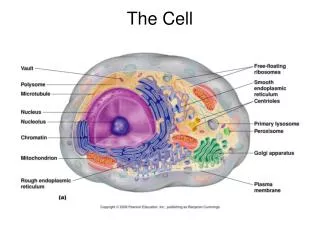
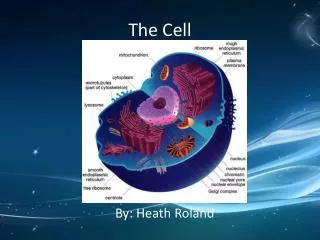
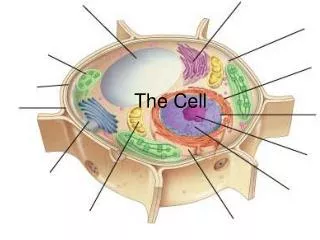
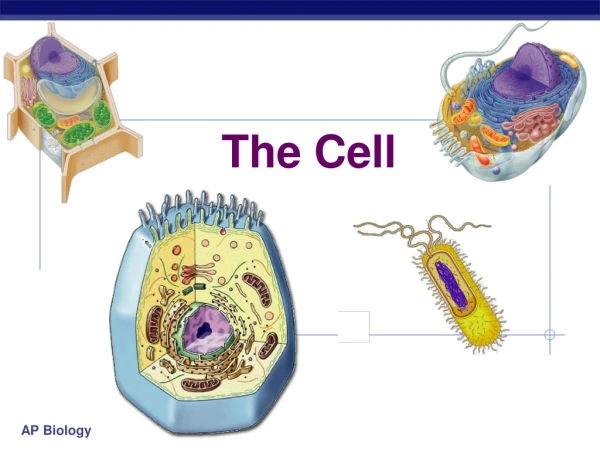
All Cells • Cell membrane
All Cells • Cell membrane • Cytoplasm
All Cells • Cell membrane • Cytoplasm • Usually live in fluid environment
Plasma Membrane • Also called cell membrane • Controls what goes into and comes out of cell • Selectively permeable
Plasma Membrane • Lipid bilayer made of phospholipids • Phosphate portion is attracted to water, while tails of fatty acid are repelled by water
Plasma Membrane • Proteins extend through structure to enable transport • Glycolipids and cholesterols help maintain shape and function
Fluid Mosaic Model • Proposed by S. J. Singer and Garth Nicolson • Proteins are free to move around in fluid phospholipid layer
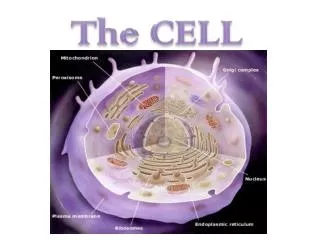
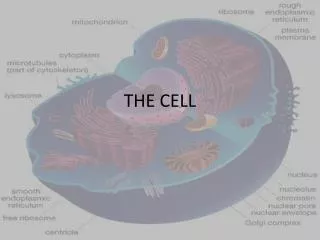
Other Membranes • Internal cell structures (organelles) • Membrane composition and structure differs slightly for organelles • Function depends on structure